
What's inside
As an Amazon Associate I earn from qualifying purchases. This post may contain affiliate links at no extra cost to you.
The best cheap grow tent kit for beginners is the bundle whose cheapness is in its price rather than in its contents, and telling the two apart is this guide’s whole job. A complete kit should put a first-time grower one shopping trip from a working tent: the tent itself with a frame that stands straight and zips that survive the year, an LED light strong enough for the tent’s footprint at flowering, not merely at seedling, a ventilation set, inline fan, carbon filter, and ducting, that moves the tent’s air and manages its smell, and the small parliament of accessories, timer, hygrometer, hangers, and pots, without which the big pieces cannot be run. The market’s cheap kits divide into the honest bundles, assembled by the tent and light makers from their own real components, and the trap bundles, whose photographs show a jungle and whose boxes contain a light fit for a houseplant and a fan fit for a desk. This guide compares six real, currently sold kits graded for beginners, prices them as the complete systems they claim to be, and names what each still leaves to buy, because the truest price of a cheap kit is its sticker plus the upgrades it forces by the third week of flower.
Set the beginner’s expectations in the currency of outcomes. A good cheap kit in the 2×2 to 3×3 foot class grows a small number of plants well, teaches the full cycle from seedling humidity to flowering stretch to a controlled dry, and survives to be the second tent, the veg or drying tent, when the hobby inevitably expands. It will not light a 4×4, it will not be silent, and its zippers and fan bearings are on a shorter clock than the premium gear’s, all of which is a fair bargain at its price provided the light is real, because the light is the harvest’s ceiling and the one component whose cheapness cannot be renovated later by technique. Judge every kit in this table light-first, tent second, ventilation third, and accessories as the tiebreak, and the beginner’s money lands where the plant spends it.
Our Top Picks
Best Cheap Grow Tent Kit for Beginners: What Complete Actually Means
The Light Decides the Kit: Watts, Coverage, and the Flowering Test
A kit’s light should be graded at the tent’s flowering footprint, the hungriest stage, where common guidance asks for strong, even intensity across every inch the canopy will fill. The trap kits fail here with arithmetic: a light marketed by a wattage it does not draw, or an honest small light paired with a tent twice its coverage, so the seedlings thrive for the photograph and the flowering canopy starves at its edges. Read the kit’s light by its true draw and its maker’s coverage map for flowering, not for veg, and prefer the kits built around the reputable light lines in this table, the bar and board designs from the tent makers themselves, with dimmers that let a beginner run seedlings gently and flower at full strength on the same fixture. A dimmable, full-spectrum LED of honest output for the footprint is the single specification that separates the kits that produce a harvest from the kits that produce a lesson, and the lesson costs the same season.
Ventilation and the Tent: The Unglamorous Two-Thirds
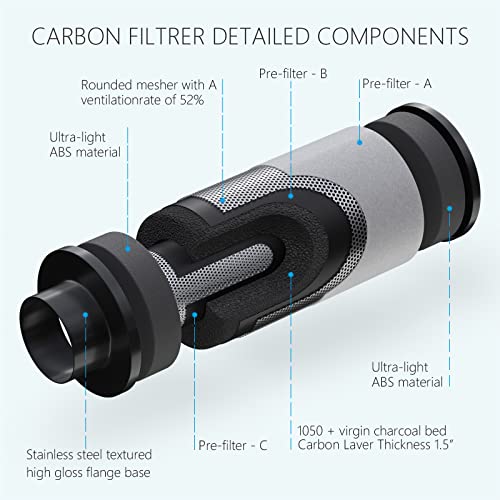
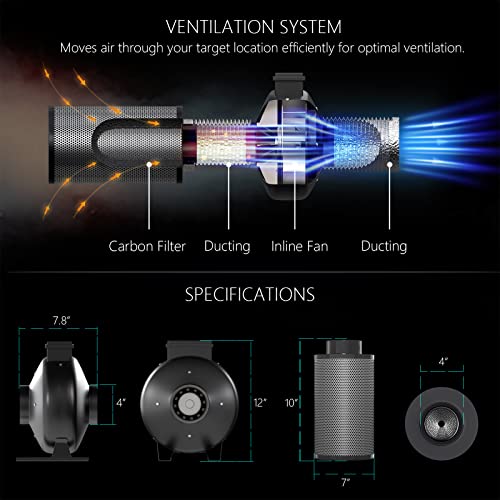
The tent itself is graded on canvas weight, frame honesty, and zips: a 600D-class canvas resists the light leaks and the wear of a year of openings; steel poles and real corner fittings stand straight under a hung light and filter, where plastic corners announce their retirement by leaning; and the zipper, worked twice a day for a year, is the component whose quality the beginner will know most intimately, so a kit whose maker brags about its zips is a kit whose maker has buried the cheap ones before. Ventilation is sized by the tent’s volume and the light’s heat: the fan must exchange the tent’s air briskly and pull through a carbon filter’s resistance, which is why the 4 inch class serves the small tents and the kits that include a fan without a filter, or a filter without the fan’s strength to use it, are selling the smell management’s photograph rather than its function. Smell, for most home growers, is not a preference but a household and tenancy condition, and the complete kit treats the filter as standard equipment, as every row in this table does.
The Small Print: What Kits Leave Out and What It Costs
Read every kit’s contents against the working list: timer for the light, because a hand-switched photoperiod fails by the second weekend; hygrometer, because climate by guesswork is this site’s oldest sermon; ratchet hangers for the light, fabric pots and a medium plan, and, often missing, the clip fan for canopy air movement, the trellis net for the flowering stretch, and the pH and nutrient basics if the grow is hydroponic or fertigated. Some omissions are honest scope, a soil grower does not need the hydroponic meter in the box, and some are the trap’s mechanism, the kit priced without the timer it cannot run without. The table’s reviews name each kit’s notable gaps so the beginner can price the true total, kit plus the short list, against the rival kit that included them, which is the only comparison the word cheap deserves.
Best Cheap Grow Tent Kit for Beginners: Quick Comparison
| Cheap Grow Tent Kit | Key Specs | Best For | Typical Price Range (Kit) | Rating |
|---|---|---|---|---|
| Spider Farmer 2×2 Grow Tent Kit (SF1000 class light) | 2×2 tent class, Samsung-diode LED in class, fan and carbon filter set, timer and accessories in kit class | Best cheap grow tent kit for beginners overall | $280 – $380 | 4.6 / 5 |
| VIVOSUN Grow Tent Complete Kit 2×2 (VS1000 class) | 2×2 tent, LED, 4-inch fan and filter class, deep accessory bundle in kit class | Best accessory-complete budget kit | $250 – $350 | 4.4 / 5 |
| MARS HYDRO 2.3×2.3 Kit (TS600/TS1000 class) | Slightly larger small tent class, Mars LED lines, fan and filter class, value pricing | Best value per square foot | $260 – $360 | 4.4 / 5 |
| AC Infinity Advance Grow System 2×2 | 2×2 CLOUDLAB tent class, IONBOARD LED class, controller-driven ventilation class, premium build | Best upgrade-proof starter kit | $450 – $600 | 4.7 / 5 |
| iPower Grow Tent Kit 2×2 class | Budget tent, LED or HID variants in class, fan and filter class, wide retail availability | Best rock-bottom price | $200 – $300 | 4.0 / 5 |
| CoolGrows 2×2 Grow Tent Kit class | Budget tent and LED bundle class, fan and filter in kit class, entry pricing | Best for a trial first grow | $190 – $280 | 3.9 / 5 |
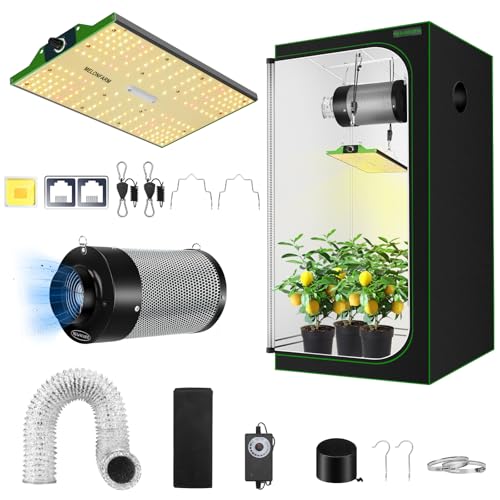
MELONFARM Grow Tent Complete Setup 2x2, 70W Full Spectrum LED Grow Light & 24"x24"x48" Grow Tent Bundle, 4" Efficient Airflow Ventilation System with Soundproof Duct Connector
As an Amazon Associate we earn from qualifying purchases. Product prices and availability are accurate as of the date/time indicated.

VIVOSUN 2x4x6 Grow Tent Kit with 200W Lumalight A22 Smart Plug 48"x24"x72" | including 200W Full Spectrum LED, Automatic Ventilation, A22 GrowHub Controller with Temp Humidity Sensor, Upgraded Grow Tent
As an Amazon Associate we earn from qualifying purchases. Product prices and availability are accurate as of the date/time indicated.

TopoGrow Grow Tent Complete Kit 300W LED Grow Light Full-Spectrum Indoor Hydroponics 32"X32"X63" Grow Tent 4" Ventilation Kit with Hangers,Hygrometer, Shear, Timer,Trellis Netting Full Setup




As an Amazon Associate we earn from qualifying purchases. Product prices and availability are accurate as of the date/time indicated.
Prices shown are approximate and for reference only. Prices change often, so please check the current price on Amazon before you buy.
Kit contents and light models vary by the seller’s current bundle revision; verify the exact light model, fan, and filter in the listing before ordering, as the guide insists. Ratings are editorial, weighing light adequacy for the footprint, tent and zip quality, ventilation completeness, included accessories, and value as a first system.
The Six Beginner Kits Reviewed
1. Spider Farmer 2×2 Kit: Best Overall Cheap Kit
Spider Farmer’s kit leads the cheap class because its light is not cheap: the SF1000-class fixture, built on quality diodes with a dimmer, genuinely flowers its 2×2 footprint, which is the test the trap kits fail and the only test that decides whether a first grow ends in a harvest or in a forum post. Around it the bundle is complete in the honest sense, tent of respectable canvas and frame, fan and filter sized to each other, timer, hangers, pots, and the hygrometer this site’s sermons require. Its fan is the budget class’s for noise, its zips are a class below the premium tents’, and neither matters to its verdict: at its price it is the cheapest kit in this table that a beginner can run for a full cycle without a forced upgrade, which is the definition of cheap that this guide recognizes.
2. VIVOSUN 2×2 Complete Kit: Best Accessory-Complete Budget
VIVOSUN’s kit competes on the completeness of its box: tent, VS1000-class light, fan and filter, and an accessory bundle generous enough that the beginner’s second shopping trip shrinks to medium and nutrients. Its light serves its footprint honorably, its tent is the ecosystem’s standard canvas and frame, and its components speak to each other, hangers, ducting, and clamps all present and sized. Its fan noise and its zip quality are the class’s usual taxes, and its sheer ubiquity is a hidden virtue, every problem it will ever have has been solved in a forum thread with photographs. For the beginner who wants one box and a short list, it is the budget’s most considerate answer.
3. MARS HYDRO 2.3×2.3 Kit: Best Value per Square Foot
Mars Hydro’s slightly larger small tent is the value play for the beginner with the floor space: a footprint that fits a plant or two more than the 2×2 class, lit by the TS line’s honest output in its kit configurations, with ventilation in the matching class, at prices that undercut the leaders per square foot of garden. Verify the kit’s exact light before ordering, since the bundle revisions pair the tent with different TS models across sellers and seasons, and the flowering test in this guide should be applied to the light actually in the box. With that check done, it is the kit for the beginner whose ambition is a half-step above the minimum and whose budget is not, a common and honorable position.
4. AC Infinity Advance Grow System 2×2: Best Upgrade-Proof Starter
AC Infinity’s system is the cheap kit’s premium rebuttal: it costs more, and it is in this table because for many beginners it is the cheapest kit over two years, the one that never gets replaced. The CLOUDLAB tent’s canvas, frame, and zips are the class’s reference; the IONBOARD light is sized and dimmable with a controller’s intelligence; and the ventilation runs through the brand’s controller ecosystem, so temperature and humidity steer the fan automatically and the beginner learns climate from data rather than from disasters. Its price buys out the upgrade cycle entirely, and its graduates do not sell it when they expand; they demote it to the veg tent with respect. If the budget can stretch once, this is the stretch, and its rating reflects the two-year arithmetic rather than the sticker.
5. iPower 2×2 Kit: Best Rock-Bottom Price
iPower’s kits are the market’s floor from a real hydroponics brand: a serviceable tent, light options that range from adequate LEDs to the older HID configurations whose heat a small tent must be vented for honestly, fan and filter in the class, at prices that make the first grow a cheap experiment. Its components are the budget class’s in every direction, canvas, zips, fan manners, and its light must be chosen from its variants with this guide’s flowering test applied strictly, since the spread between its configurations is the widest in the table. For the renter, the student, and the grower testing whether the hobby itself takes, it lowers the cost of finding out to the price of a textbook, and that is a legitimate service.
6. CoolGrows 2×2 Kit: Best for a Trial Grow
CoolGrows occupies the trial tier: a tent and light bundle with ventilation in its kit class, priced for the grower whose commitment is one cycle, honestly graded as the table’s lightest construction. Its light serves a small footprint at the modest end, its tent assembles and grows a first plant without drama, and its components should be regarded as the tuition’s equipment rather than the hobby’s foundation. It earns its row because the trial grow is a real use case, the balcony-adjacent beginner, the legal-market newcomer testing a thumb’s color, and because a cheap kit honestly labeled beats a trap kit at the same price. Buy it with eyes open, harvest the lesson and perhaps the plant, and let its successor be chosen from the rows above it.
Buying Guide: How to Choose the Best Cheap Grow Tent Kit as a Beginner
Step One: Size the Tent to the Space and the Ambition, Once
Measure the space with the tent’s working reality included: the footprint, the height against the ceiling with the light’s hanging distance above the canopy counted, and the door swing and access your daily watering needs, because a tent that fits the room but not the routine is returned or resented. Match the ambition to the footprint’s honest yield: the 2×2 class serves one to a few plants and one beginner’s learning curve perfectly, the 3×3 tempts as the one-size-up that many growers wish they had bought, and anything larger stops being a cheap kit and starts being a room. Buy the tent size you will still respect in the second cycle, since the tent is the component least often upgraded and most often regretted at one size too small, and let the kit be built around that footprint by its maker rather than assembled across sizes by hope.
Step Two: Audit the Kit’s Contents Against the Working List
Before ordering, check the listing’s contents line by line against the complete standard in this guide: tent with steel frame, LED with a named model whose flowering coverage matches the footprint, inline fan and carbon filter sized together, ducting and clamps, light timer, hygrometer, hangers, and pots. Price every absence at retail and add it to the kit’s sticker, then compare the true totals across your shortlist, because the cheapest kit is routinely the one whose box was fullest. Confirm the light’s model in the seller’s current revision, confirm the fan and filter are both present and matched in diameter, and read the kit’s recent reviews for the zipper and the fan, the two components whose failures dominate cheap kit returns. This audit takes ten minutes and is the entire difference between buying a system and buying a starter set of problems.
Step Three: Set Up for the First Cycle’s Success, Not Its Photograph
Assemble the tent where it will live, run the ventilation before the plants arrive, and test the system empty for two days: light on its timer, fan and filter moving air, hygrometer logging the room’s climate into the tent’s, so the first seedlings enter a proven environment rather than a hypothesis. Hang the light at the maker’s distance for each stage, dimmed for seedlings as the fixture allows, set the hygrometer at canopy height by this site’s placement rules, and keep the first cycle’s variables few: one growing method, one nutrient line followed at half strength until the plants argue otherwise, and a journal, because the beginner’s kit teaches only the grower who writes down what it did. Expect the kit’s taxes, the fan’s hum, the zip’s care, and meet them with the maintenance they ask, a filter’s prefilter washed, a fan’s intake kept clear. A cheap kit run with this discipline produces a first harvest that growers with three times the budget envy, because the plant cannot read a receipt, only a climate.
Frequently Asked Questions About Cheap Grow Tent Kits for Beginners
Is a grow tent kit really cheaper than buying the pieces separately?
At the beginner sizes, usually yes, and the reason is the makers’ own bundling: the tent and light houses assemble their kits from their own components at a combined price below the parts’ retail sum, with the compatibility questions, fan to filter to tent ports, answered by the bundle itself. The exception is the trap kit, whose sticker beats the honest bundles by omitting or shrinking the components this guide’s audit prices back in, at which point the separate purchase of honest parts wins. The second exception is the patient sale-watcher, who can beat any kit by buying the same components across a season of discounts, at the cost of the season. For the beginner who wants to grow this cycle, the honest kit is the cheapest route to a working tent, provided the audit in the buying guide confirms the box contains the system its photograph promises.
What size kit should a first-time grower start with?
The 2×2 foot class for the grower whose space, budget, or commitment is genuinely small, and the 3×3 for the grower with the floor and the likelihood of a second cycle, which is most growers who finish a first. The 2×2 teaches everything, humidity, stretch, training, drying, at a scale where mistakes are cheap and the light’s cost stays in the beginner’s territory. The 3×3 buys elbow room, a plant or two more, and a light bill a step higher, and it is the size whose owners least often buy twice. Height matters as much as footprint: choose the tallest tent the room allows, because light distance and plant stretch spend height faster than any beginner budgets, and a tall tent can grow short plants while the reverse is not true. Whichever size, let the kit be the maker’s matched bundle for that footprint, since the light’s coverage and the fan’s strength were engineered against it.
Can a cheap kit grow quality plants, or do I need premium gear?
A cheap kit from this table’s honest rows grows quality plants, because the plant’s requirements are physical, light of sufficient intensity and spectrum, air exchanged and moving, climate in the bands, roots fed and watered on schedule, and none of them check the tent’s price tag. Premium gear buys the margins around those requirements: quieter fans, longer-lived zips, controllers that hold the climate while you travel, and lights whose efficiency converts electricity to harvest at a better rate across years. The beginner’s quality ceiling in a first cycle is set by their own learning curve, not by the kit’s, provided the kit’s light passes the flowering test and its ventilation actually exchanges the air, which is why this guide grades those two without mercy and forgives the rest. Grow the first cycle on the honest cheap kit, keep the journal, and let the second cycle’s upgrade list be written by your own data, which is how every good grow room in this hobby was actually built.
What else do I need to buy besides the kit?
The living half of the grow, which no hardware kit includes: seeds or clones from a legal, reputable source where your jurisdiction allows cultivation, and only there, since this site’s first rule is that a grow begins with the law of the place it grows in; growing medium, soil or coco or a hydroponic system’s consumables; nutrients matched to the medium, fed by the maker’s schedule at a beginner’s restraint; water whose pH you can measure and adjust, with an inexpensive meter that this site regards as non-optional for anything beyond the most forgiving soil grows; and the small consumables, ties, a spray bottle, a watering can with a gentle rose, trimming scissors for the harvest you are planning toward. Budget the living half at a meaningful fraction of the kit’s price for the first cycle, less thereafter, and confirm your local law on plant counts and home cultivation before the first seed is ordered, because the best cheap kit in this guide is the one whose grow is legal, documented, and boring to everyone but the grower.
Related guides
- Best Air Purifier for Hydroponics in 2026: 6 Purifiers for Clean Air, Odor Control, and Healthy Plants
- Best Ventilation Accessories for Growing in 2026: Best Ventilation Accessories for Growing for Fresh Air, Good Temperature, and Simple Grow Use
- Best Grow Tent Kit for Mountains in 2026: How to Pick a Grow Tent Kit for Mountains That Is Warm, Durable, and Grows Healthy Vegetables at High Altitude
- Best Ventilation Maintenance Kit for Growing in 2026: Prefilters, Carbon, Ducting, and Tools That Keep a Grow Tent Breathing
More from Amazon
Programs that pair well with the guide above. Offers and eligibility are set by Amazon and may change.
Free shipping on eligible items, Prime Video and more. Eligible new members can start with a free trial.
Start a Prime free trialAudiobooks and podcasts to listen to on the go. Eligible new members can start with a free trial.
Try Audible freeAd-free music streaming. Eligible new subscribers can start with a free trial.
Try Music Unlimited freeA free business account with business pricing and bulk-buying tools for work, shop or home office.
Create a business accountAs an Amazon Associate we earn from qualifying purchases.

Write Your Review
No reviews yet. Be the first to share your experience!