
What's inside
As an Amazon Associate I earn from qualifying purchases. This post may contain affiliate links at no extra cost to you.
Weighing replaceable probe meter pros cons is the moment a grower stops shopping for a pH and EC meter and starts shopping for a measurement system, because the two designs fail, and cost, in completely different ways. A sealed, non-replaceable meter is one object with one lifespan: when its probe drifts, fouls, or dies, and probes are consumables that do all three on a schedule set by chemistry rather than by care alone, the entire meter, its electronics, its display, its calibration memory, goes into the bin with the probe. A replaceable-probe meter separates the marriage: the body is a durable instrument, and the probe is a part, swapped in minutes when its time comes, at a fraction of the whole meter’s price. This guide lays out the pros and cons without a salesman’s thumb on either side, grades six real, currently sold meters across both philosophies in one table, and closes with a buying guide that decides the question by the grower’s scale and habits, because the honest answer is conditional: the replaceable design is one of the best economics in the grow room at one scale, and an overbuilt indulgence at another, and the line between them is knowable before you spend.
Begin with the probe’s mortality, because every pro and con in this article descends from it. A pH probe is a glass electrode with a reference junction, and it ages in service: the glass’s response slows and drifts, the junction clogs with the nutrient solution’s salts and organics, storage mistakes, letting it dry, storing it in pure water, shorten its life further, and even a pampered probe is a one-to-three-year citizen in active hydroponic duty, with EC probes hardier but not immortal, their cells fouling and their constants wandering. The meter body, by contrast, has no such clock; electronics kept dry serve for a decade. The sealed meter therefore yokes a ten-year component to a two-year component and sells the pair at the two-year component’s lifespan, a fact that is not a scandal, the sealed meter is cheaper to build and to buy, but is the arithmetic the buyer should perform with open eyes. The replaceable design’s entire case is that arithmetic, and its entire cost is the higher shelf price and the discipline of a system with parts, both of which this guide will now weigh properly.
Our Top Picks
Replaceable Probe Meter Pros Cons: The Full Ledger
The Pros: Lifespan Economics, Uptime, and Upgrade Paths
The lifespan argument is the headline and it is arithmetic rather than opinion: across a five-year horizon, the sealed meter’s owner buys the whole meter two or three times, while the replaceable meter’s owner buys the body once and a probe or two, and at the quality tier the totals cross early and then diverge, the replaceable system commonly costing less by the third year while measuring better throughout, since a fresh probe restores factory accuracy where a tired sealed meter’s last year is spent drifting politely. Uptime is the second pro and the one commercial growers cite first: a probe that fails on a Tuesday is replaced from the shelf spare the same hour, the meter recalibrated and back in the reservoir, where the sealed meter’s failure is a shipping delay measured in crop risk. The third pro is specialization: a replaceable platform accepts different probes for different duties, the standard probe for the reservoir, a soil probe for the medium’s direct measurement, a high-range EC cell where the work demands it, turning one body into an instrument family. And the fourth is waste, modest but real: a probe in the bin is a smaller object than a meter, and the grower who keeps one body for a decade has made the room’s electronics drawer a calmer place in the bargain.
The Cons: Shelf Price, Connectors, and the Discipline Tax
The cons begin where the shopper meets them, at the price tag: a quality replaceable-probe meter costs meaningfully more than the sealed meter of similar accuracy, commonly half again to double, and for the grower who will lose, break, or abandon the hobby before a probe’s lifespan runs, that premium buys a future they will never collect. The connector is the second con and the design’s honest weak point: the probe’s plug, BNC and its kin, is a junction that corrodes in the grow room’s humidity, works loose, and must be kept clean and seated, a failure mode the sealed meter simply does not have, and field experience is full of meters condemned for a probe’s sins that were a dirty connector’s. The third con is the discipline tax: the replaceable owner manages parts, storage solution, calibration buffers, a spare probe’s shelf life ticking in its box, where the sealed owner manages one object and replaces it whole, a simplicity with genuine value to the small grower whose attention is the scarcest input in the room. And the fourth con is ecosystem lock: probes are not universal across brands and sometimes not across a brand’s own generations, so the replaceable purchase is partly a marriage, to be entered with the maker’s longevity and the probe’s price and availability checked like a prenup.
Accuracy and Calibration: Where the Designs Actually Tie
Clear away the misconception that replaceable means more accurate, because at purchase, a quality sealed meter and a quality replaceable meter measure alike, and both are only ever as accurate as their last calibration, a truth no connector changes. Where they diverge is accuracy’s lifespan: the replaceable meter’s accuracy is renewable, restored to specification with each fresh probe and calibration, while the sealed meter’s accuracy is a decaying asset whose owner must judge, without a specification to consult, when drift has become error. Calibration itself is identical in ritual, two-point for pH with fresh buffers, the EC standard for conductivity, and identical in its disciplines, buffers never returned to the bottle, probes rinsed between solutions, storage solution in the cap, and this guide’s steps will teach it once for both philosophies. The verdict of this section is the article’s pivot: choose replaceable for time, uptime, and systems; choose sealed for price and simplicity; and do not let any seller convince you the connector itself measures better, because the probe does the measuring, and probes, on both designs, are born equal and age at the same chemistry’s pace.
Replaceable Probe Meter Pros Cons: Quick Comparison of Six Meters
| Meter Model | Key Specs | Best For | Typical Price Range | Rating |
|---|---|---|---|---|
| Bluelab Combo Meter | Replaceable pH probe in class, EC/temperature in line, portable with probe leads positioning | Best replaceable probe meter overall | $200 – $280 | 4.8 / 5 |
| Hanna Instruments GroLine HI9814 class | Replaceable probe positioning in line, pH/EC/TDS/temperature, grower-focused design | Best grower-focused replaceable | $180 – $240 | 4.6 / 5 |
| Apera Instruments PC60 class | Replaceable multi-parameter probe in class, pocket format positioning | Best pocket replaceable | $130 – $170 | 4.5 / 5 |
| Bluelab Guardian Monitor class | Wall-mounted continuous monitor in class, replaceable pH probe positioning in line | Best continuous monitoring | $330 – $420 | 4.6 / 5 |
| Milwaukee MW802 / PRO class | Replaceable probe in line in class, pH/EC/TDS bench-portable positioning | Best bench value replaceable | $150 – $210 | 4.4 / 5 |
| Apera PH20 / EC20 class (sealed) | Sealed pocket testers in class, low price, replace whole unit | Best sealed alternative | $50 – $80 | 4.2 / 5 |
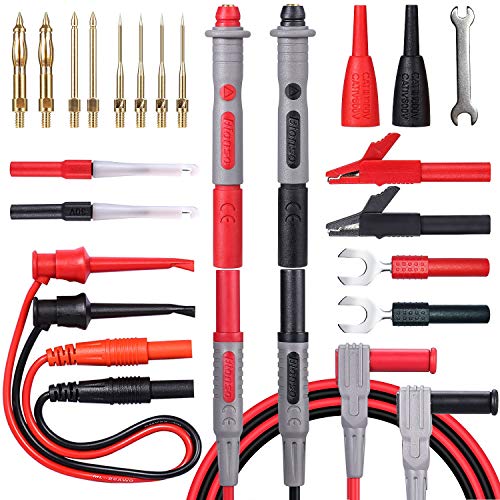
Bionso 25-Piece Multimeter Leads Kit, Professional and Upgraded Test Leads Set with Replaceable Gold-Plated Multimeter Probes, Alligator Clips, Test Hooks and Back Probe Pins.
As an Amazon Associate we earn from qualifying purchases. Product prices and availability are accurate as of the date/time indicated.

SWANLAKE 27-Piece Multimeter Test Leads Set, CAT.III 1000V / CAT.IV 600V Multimeter Probes with Alligator Clips, Needle Probe, Replaceable Probe Accessories, Soft PVC Volt Meter Lead
As an Amazon Associate we earn from qualifying purchases. Product prices and availability are accurate as of the date/time indicated.
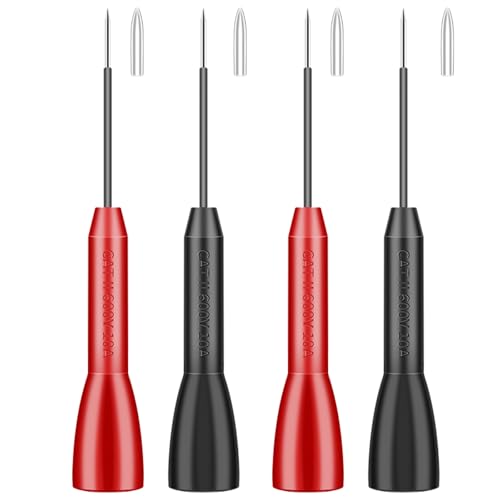
4 Pack 2mm Extended multimeter Needle Test Probes, 600V/10A Non-Destructive | Insulation Wire Piercing Stainless Steel extra thin electrical Needle multimeter Probe for Fluke meter test Leads (Black-Red)


As an Amazon Associate we earn from qualifying purchases. Product prices and availability are accurate as of the date/time indicated.
Prices shown are approximate and for reference only. Prices change often, so please check the current price on Amazon before you buy.
Probe replaceability and parameters summarize manufacturers’ published information for current versions; verify probe compatibility and replacement probe pricing for the exact model. Ratings are editorial, weighing measurement quality, probe system economics, build and support, and value within each design philosophy.
The Six Meters Reviewed
1. Bluelab Combo Meter: Best Replaceable Overall
Bluelab’s Combo is the replaceable philosophy’s reference implementation: a portable body carrying pH on a replaceable probe, conductivity and temperature on their own, with the calibration discipline the house is famous for, indicator lights that tell the owner when calibration is due rather than leaving it to memory. Its probes are priced and stocked like the consumables they are, its support and documentation are the hobby’s benchmark, and its owners’ decade-long bodies are the pro column’s Exhibit A. Its price is the premium the cons describe, and for the serious reservoir grower it is repaid on the schedule this guide’s arithmetic promises. It leads the table because in a comparison about systems, the best system wins, and this is it.
2. Hanna GroLine HI9814: Best Grower-Focused
Hanna built the GroLine series for this exact market, and the HI9814 class shows it: a replaceable probe carrying pH, EC, TDS, and temperature in one head, a body designed for wet hands and reservoir work, and the laboratory house’s calibration rigor behind it. Its single-probe convenience trades a measure of the Combo’s modularity, one probe’s failure idling all parameters until the spare arrives, a con its owners answer by stocking the spare, as this guide will advise. Its price undercuts the leader’s modestly, and for the grower who wants one probe to rinse, store, and calibrate, it is the most coherent alternative in the table.
3. Apera PC60 Class: Best Pocket Replaceable
Apera’s multi-parameter pocket meters bring replaceability down to the handheld tier: a pocket body whose probe head unscrews for replacement, carrying pH and conductivity in its class, at a price that narrows the sealed design’s advantage to a sliver. Its pocket format caps its durability ambitions, its connector lives closer to the wet than the bench models’, and its accuracy and support have built the brand’s following among growers who calibrate seriously. For the small grower who wants the system’s economics without the bench instrument’s price or footprint, it is the bridge row, and its existence has quietly ended the argument that replaceable is a commercial-only luxury.
4. Bluelab Guardian: Best Continuous Monitoring
The Guardian class changes the question from carrying a meter to living with one: a wall-mounted monitor watching pH, conductivity, and temperature continuously, its replaceable pH probe resident in the reservoir, alarming when the values leave their bands. Its pros are the system’s at their strongest, a probe swapped in minutes at its term, a body that serves for years, and its cons are the installation’s, a fixed station, a price at the table’s summit, and probes aging in continuous duty faster than a handheld’s. For the grower whose reservoir justifies a sentinel, it is the endgame of the replaceable argument, and its rating reflects a product that commercial rooms standardize on for reasons this article has already given.
5. Milwaukee MW802 Class: Best Bench Value
Milwaukee’s bench-portable meters deliver the replaceable pattern at a working price: pH, EC, and TDS on a replaceable probe in its class, a body sized for the bench and the bucket’s rim, and the no-frills engineering of a house that sells to laboratories and breweries as readily as to growers. Its finish and interface are its price’s, a step below the leaders’, and its probe ecosystem is its own, to be checked by the prenup rule of the cons. For the grower stepping up from sealed testers who wants the system’s economics without the flagship’s tariff, it is the value door into the philosophy, and many long tenures have begun exactly here.
6. Apera PH20 / EC20 Sealed Testers: Best Sealed Alternative
The sealed row is represented by its best citizens, Apera’s pocket testers, whose accuracy at their price has embarrassed meters costing three times as much and whose honesty about their nature is complete: they are consumable instruments, calibrated and cared for like quality tools, and replaced whole when their probes’ time comes. For the soil grower measuring occasionally, the beginner whose hobby must first survive its first year, and the big room that keeps sealed testers as cross-checks against the main system’s drift, they are not the wrong answer but the right one, and their rating, the table’s lowest and still respectable, is this guide’s pros-and-cons discipline made visible: the philosophy is graded down for time, not for quality, and the buyer whose horizon is short should take the row and its savings without a flicker of doubt.
Buying Guide: How to Decide Between Replaceable and Sealed Probe Meters
Step One: Run Your Own Three-Year Arithmetic
Put your numbers where this article’s generalities were. Price the replaceable system whole: the body, one replacement probe at its current price, buffers and storage solution for three years. Price the sealed path honestly: the meter, replaced at the interval your duty implies, two purchases across three years for active hydroponics being the planning figure, three for continuous or heavy use. Add your downtime’s price, a commercial room’s failed probe during a crop being a cost the home grower’s arithmetic may set at zero and the professional’s may set above everything else on the page. The crossover in most real budgets arrives in the second or third year, earlier as the grow’s value rises, later as its intensity falls, and the grower who runs the figures for their own reservoir will find the decision has quietly made itself, which is how buying decisions in a technical hobby should feel: less like a preference and more like a measurement, taken with the instruments this article is about.
Step Two: If Replaceable, Vet the Ecosystem Like a Marriage
Before the body is bought, price and source its probe: the replacement’s cost today, its availability from more than one seller, and the maker’s history of supporting older models, since a body orphaned by a discontinued probe is a sealed meter at a replaceable price, the worst cell in this article’s entire ledger. Confirm the probe’s storage and calibration consumables are equally stocked, and buy the first spare probe with the meter if the grow is commercial or remote, since the uptime pro exists only when the spare is on the shelf rather than in a cart. Learn the connector’s care in the same sitting, kept clean, dry, and seated, inspected when readings wander before the probe is blamed, the discipline that retires the design’s commonest false failure. And register the purchase and keep the paperwork where the room’s records live, because a system bought for a decade should be documented like one.
Step Three: Whichever You Buy, Keep It Like an Instrument
The care ritual is the same for both philosophies and decides more accuracy than the purchase did. Calibrate pH at two points with fresh buffer on the maker’s schedule and whenever a reading is doubted, rinse between solutions, never return buffer to its bottle, and check EC against its standard on its own rhythm. Store the pH probe wet in its proper storage solution, never dry and never in pure or distilled water, the two errors that kill more probes than age does, and clean a fouled probe by its maker’s method before condemning it, since a clogged junction mimics death convincingly and recovers gratefully. Keep a log, calibration dates, probe changes, the odd reading noted, because the log is what turns a suspicion of drift into a diagnosis. And the standing rule that frames this site’s growing advice applies to the room the meter serves: know and follow your local law on indoor cultivation, keep the installation safe and legal, and let the measurements be in service of a garden that is above reproach as well as above average. An instrument kept so will tell you the truth for years, in whichever philosophy you bought it, and the truth, in a reservoir, is the whole crop.
Frequently Asked Questions About Replaceable Probe Meters
Is a replaceable probe meter worth the extra money?
For the grower who will still be growing, at the same or larger scale, in three years, the arithmetic in this guide’s steps says yes in most real budgets: the body’s premium is repaid when the first probe’s replacement costs a fraction of a whole meter, and repaid again in uptime, in renewable accuracy, and in the option of specialized probes. For the beginner whose first year must first prove the hobby, the small soil grower measuring weekly rather than daily, and the notoriously hard-on-equipment grower whose meters die by dropping rather than by drift, the sealed meter’s lower price is the honest better buy, since a lifespan advantage is worthless to an owner whose horizon or habits never reach it. The question is therefore not which design is better but which grower you are, answered by the three-year arithmetic and by a candid look at your own shelf of abandoned hobbies, and this guide’s respect for the sealed row in its table is its respect for the second answer, which is the right one for a great many readers.
How long does a replaceable pH probe actually last?
In active hydroponic service with proper storage and calibration, the planning figure is one to two years of reliable, calibratable life, with careful owners reaching beyond it and neglected probes failing inside a season, the variance belonging to care rather than to luck. The death is usually a decline rather than an event: calibration that will not hold across a day, response that slows until a reading takes minutes to settle, an offset that exhausts the meter’s adjustment, each a signal the log of Step Three makes legible early. EC probes live longer, their failure being fouling that cleaning often reverses, which is why the combo systems’ replacement rhythm is set by the pH side. The owner’s correct posture is to budget the probe as the consumable it is, like the buffer and the storage solution beside it, so its replacement is a maintenance event on a calendar rather than a betrayal by a product, a framing that this entire article, in the end, exists to teach.
Can I use another brand’s probe on my meter?
Generally no, and the attempt should not be made on a hope: while the BNC connector itself is a shared standard in much of the industry, probes differ in their reference systems, their temperature compensation, their EC cell constants, and their pinouts where combination probes are concerned, so a foreign probe may plug in and still measure wrongly, the most dangerous failure a meter can have. Some makers’ probes do cross within their own lines and generations, which the maker’s documentation will state, and that statement, not the connector’s fit, is the permission. The practical consequence is the prenup of Step Two, vetting the probe’s price and availability before the body is bought, because the marriage is to the ecosystem and the ceremony is the purchase. Where a grower already owns an orphaned body, the honest options are the maker’s remaining stock, a sealed tester to carry the duty, or the new system bought with this lesson priced in, and each has been chosen, ruefully and wisely, by growers before you.
Why does my meter drift even with a new probe?
Work the differential diagnosis in the order of its likelihood, because a new probe is only one suspect among four. First, calibration itself: buffers old, contaminated, or at a different temperature from the sample, a two-point calibration performed with a fouled rinse between, each manufacturing drift at the moment of calibration that the meter then faithfully reproduces. Second, the connector, the replaceable design’s known weak point, moisture or corrosion at the plug producing exactly the wandering readings a dying probe produces, cured by drying and cleaning by the maker’s method before any probe is condemned. Third, storage: a probe stored dry or in pure water between uses begins every session injured, and a new probe stored so will age in weeks. Fourth, the sample and the technique, a reservoir read at its turbulent inlet, a probe rushed before its settling, temperature compensation asked to span too wide a gap. The log of Step Three, dates, buffers, storage, turns this list from a guessing game into a checklist, and the meter, in either philosophy, rewards the methodical owner with the only thing it was ever selling: numbers that can be believed.
Related guides
- Best Air Purifier for Hydroponics in 2026: 6 Purifiers for Clean Air, Odor Control, and Healthy Plants
- Best Ventilation Accessories for Growing in 2026: Best Ventilation Accessories for Growing for Fresh Air, Good Temperature, and Simple Grow Use
- Best Grow Tent Kit for Mountains in 2026: How to Pick a Grow Tent Kit for Mountains That Is Warm, Durable, and Grows Healthy Vegetables at High Altitude
- Best Ventilation Maintenance Kit for Growing in 2026: Prefilters, Carbon, Ducting, and Tools That Keep a Grow Tent Breathing
More from Amazon
Programs that pair well with the guide above. Offers and eligibility are set by Amazon and may change.
Free shipping on eligible items, Prime Video and more. Eligible new members can start with a free trial.
Start a Prime free trialAudiobooks and podcasts to listen to on the go. Eligible new members can start with a free trial.
Try Audible freeAd-free music streaming. Eligible new subscribers can start with a free trial.
Try Music Unlimited freeA free business account with business pricing and bulk-buying tools for work, shop or home office.
Create a business accountAs an Amazon Associate we earn from qualifying purchases.

Write Your Review
No reviews yet. Be the first to share your experience!