
What's inside
As an Amazon Associate I earn from qualifying purchases. This post may contain affiliate links at no extra cost to you.
The best ph meter for beginners growing is the one that tells the truth on the hundredth reading as faithfully as on the first, because pH is the indoor grow’s master variable, the number that decides whether the nutrients you paid for can enter the plant at all, and a meter that lies politely is worse than no meter, since it sends the grower correcting a healthy reservoir into a sick one with complete confidence. The beginner’s parish has a known tragedy in three acts: the bargain pen bought in a bundle, accurate for a month and then a random number generator with a display; the deficiencies that bloom while the meter insists the water is perfect; and the education, purchased in a lost crop, that the meter is an instrument with a care liturgy and not a thermometer. This guide compares the real, currently sold pH meters across the beginner’s honest tiers, the sound budget pens, the mid-parish instruments that are this guide’s actual recommendation, and the monitor class that reads continuously, graded on accuracy that survives, calibration sense, probe care and replacement, and the total cost of ownership that the sticker conceals. It teaches the liturgy as it goes, storage solution, calibration rhythm, the reading’s proper parish, because the best meter in this table in careless hands will be outperformed by the third row in careful ones, and the beginner who learns the hands first will never buy the tragedy again.
Understand what pH governs, in one paragraph of chemistry the whole hobby stands on. The scale runs from acid to alkaline, and the plant’s roots can only absorb each nutrient inside a window of it, iron locking out in the high parish, calcium and magnesium sulking in the low, so a reservoir a point adrift does not merely slow the grow; it starves the plant selectively, in patterns that mimic a dozen other diseases and send the unmeasured grower chasing ghosts with additives. The growing parishes keep their own windows, hydroponics in the narrower, lower parish, commonly around 5.5 to 6.5, soil and coco in their slightly higher and wider ones, with the nutrient maker’s schedule as the exact law for your system. The meter’s job is to report where in that landscape the water stands, to a tenth of a point, repeatably, because the corrections are made in tenths. Everything in this guide, the tiers, the probes, the solutions, is in service of that tenth, and the beginner who internalizes it has understood more hydroponics than the owner of any single expensive gadget who has not.
Our Top Picks
Best pH Meter for Beginners Growing: Pens, Probes, and Calibration Sense
The Tiers: Toy, Tool, and Instrument
The market divides into three species that the listings deliberately blur. The toy parish, the unbranded pens sold in bundles for the price of a sandwich, shares a biography: a probe with no storage discipline, a calibration that wanders within weeks, and a lifespan measured in a season, after which its readings are fiction with decimals. It is graded in this table only as the cautionary row, because its true cost is the crop it misinforms. The tool parish, the named makers’ entry and mid pens, is the beginner’s correct home: accuracy to the parish’s honest tenth, two or three point calibration with the solutions included or honestly priced, a probe that is stored wet and, in the better citizens, replaceable, so the meter’s death is a part and not a funeral. The instrument parish, the continuous monitors and the laboratory-bred handhelds, adds the reservoir’s standing watch, temperature compensation of the first rank, and probes built for years, at prices that make sense when the garden’s value or the grower’s absence argues for them. Buy the tool parish first, learn its liturgy, and graduate to the instrument with the garden, since the monitor in a beginner’s reservoir commonly measures a neglect it cannot correct.
The Probe: A Living Thing With a Liturgy
The probe is the meter, and everything else is a display attached to it. Its glass membrane senses the water’s acidity by a chemistry that requires it to stay wet in its proper storage solution, never dry on a shelf, never in distilled water, which leaches the membrane’s parish, and the beginner who learns that single sentence has doubled any pen’s life before the first calibration. Calibration is the second sacrament: two points at minimum, the 7 and the 4 or the 10 bracketing the grow’s parish, performed with fresh solution on the rhythm the work demands, weekly in the hydro parish’s heavy use, at any reading that surprises, and always after the probe has been cleaned, dried by accident, or borrowed by a friend. Temperature compensation, automatic in every row of this table worth its salt, corrects the reading for the water’s warmth, and the reading itself has a parish: taken in the stirred reservoir, given its moment to settle, and believed only when the same water reads the same twice. The liturgy sounds like a burden and performs like a superpower, since the grower who keeps it reads the garden’s mind in a number, while the grower who skips it owns a display that shows the time in a language nobody speaks.
Pen vs Monitor: The Beginner’s Honest Choice
The pen goes to the water; the monitor lives in it, and the choice is a lifestyle audit disguised as a purchase. The pen serves the grower who mixes, measures, and adjusts in a session, the soil and coco parish’s hand-watering rhythm and the small hydro’s daily visit, at the tool parish’s friendly price and with the probe’s storage liturgy performed in its cap. The monitor serves the reservoir that runs unattended, the larger hydro system, the grower whose work takes them away, reading pH and often EC and temperature continuously, alarming the phone’s parish in the connected citizens, at an instrument price and with a probe that lives submerged and is calibrated in place. Its tax is the same liturgy at a larger scale, since a fouled, drifting monitor manufactures false confidence continuously, which is the toy pen’s sin with better marketing. The beginner’s settlement in this guide is firm: the pen first, the monitor when the reservoir’s size or the calendar’s absences argue for it, and either one kept by the liturgy, because the instrument class has never been the variable; the hands have.
Best pH Meter for Beginners Growing: Quick Comparison
| pH Meter Model | Key Specs | Best For | Typical Price Range | Rating |
|---|---|---|---|---|
| Apera Instruments PH60 / PH20 class | Pen in class, ±0.01 parish positioning, replaceable probe in PH60 line, solutions included in line | Best ph meter for beginners growing overall | $55 – $90 by model | 4.7 / 5 |
| Bluelab pH Pen | Pen in class, hydro-store parish positioning, replaceable probe in line, backlit display | Best hydro-store standard | $85 – $110 | 4.6 / 5 |
| HM Digital PH-200 / PH-80 class | Pen in class, water-resistant parish positioning, friendly pricing in line | Best value tool | $35 – $60 by model | 4.4 / 5 |
| Milwaukee MW102 / pH55 class | Handheld in class, double-junction probe positioning in line, established maker | Best probe durability | $60 – $110 by model | 4.5 / 5 |
| Bluelab Guardian / monitor class | Continuous monitor in class, pH EC and temperature positioning, in-reservoir parish | Best continuous monitor | $280 – $380 by model | 4.6 / 5 |
| Generic bundle pens (unbranded class) | Pen in class, bundle pricing positioning, no probe parish | Cautionary row only | $10 – $20 | 2.8 / 5 |

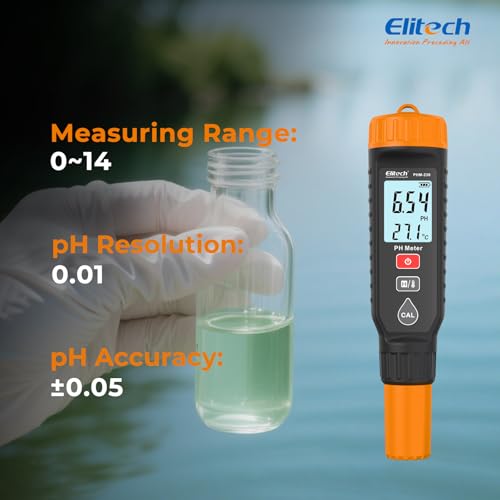
Elitech PHM-230 Professional Digital pH Pen Meter for Water and Solutions | pH Temperature Tester with ATC, Full Calibration Kit, 0.00-14.00 Range for Hydroponics, Growing, Drinking Water, Plants


As an Amazon Associate we earn from qualifying purchases. Product prices and availability are accurate as of the date/time indicated.

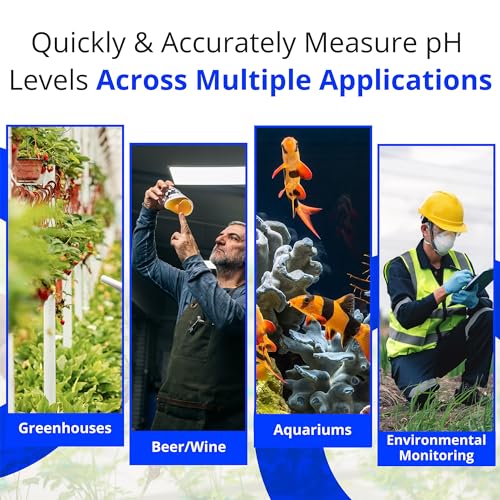
Bluelab pH Pen Meter and Probe Care Kit pH for Optimal Plant Health | With Calibration Supplies, Storage Solution and Brush - Digital Tester for pH and Temperature in Growing Solutions




As an Amazon Associate we earn from qualifying purchases. Product prices and availability are accurate as of the date/time indicated.

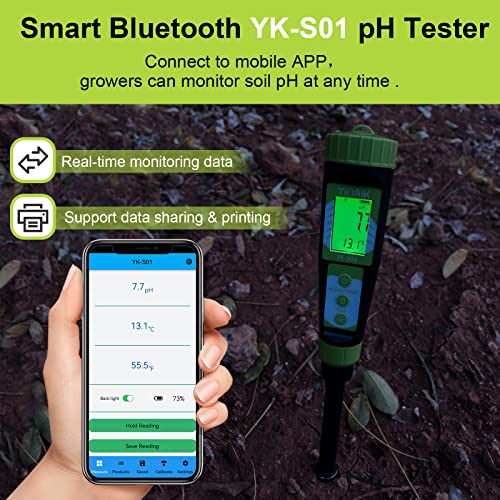
YINMIK Digital Soil pH Meter for Gardeners, Soil Direct pH Tester for Plant Care, Measure pH of Solution Potting Soil Growing Media,Great for Indoor,Greenhouse,Outdoor,Garden, Lawn, Farming, Yard Use



As an Amazon Associate we earn from qualifying purchases. Product prices and availability are accurate as of the date/time indicated.
Prices shown are approximate and for reference only. Prices change often, so please check the current price on Amazon before you buy.
Accuracy and specifications refer to the makers’ published information; all pH meters require calibration and proper probe storage as described in the text. Prices are typical US street ranges. Ratings are editorial for beginner growers, weighing sustained accuracy, calibration and probe care, build, and total cost of ownership.
The Six pH Meters Reviewed
1. Apera PH60 Class: Best Overall for Beginners
Apera’s pens lead on the beginner’s whole syllabus in one instrument: laboratory accuracy, a replaceable probe, the solutions in the box, and instructions that teach the liturgy instead of assuming it. Its price is the tool parish’s honest middle. For the first real meter, it is the recommendation defended first.
2. Bluelab pH Pen: Best Hydro Standard
Bluelab’s pen is the reservoir parish’s incumbent, sold and serviced where hydroponics is actually practiced, with a probe parish and a care kit from the same house. Its price is the incumbent’s. Where the local hydro shop is the support system, it is the standing answer.
3. Milwaukee Class: Best Probe Durability
Milwaukee’s double-junction parish answers the grower whose water is hard on probes, the reference design slowing the contamination that kills readings, in handhelds of workshop honesty. Its styling is the laboratory’s. For the long-lived probe, it earns its row.
4. Bluelab Guardian Class: Best Monitor
The Guardian parish watches the reservoir continuously, pH with its EC and temperature siblings, for the garden whose scale or whose owner’s calendar justifies the instrument. Its liturgy is the pen’s at scale, as the text insists. Where it is warranted, nothing else in the table does its job.
5. HM Digital Class: Best Value Tool
HM’s pens deliver the tool parish’s essentials at its friendliest prices, water-resistant, honest, and stocked everywhere. Their probes are the tier’s, graded plainly. As the budget’s correct citizen, the PH-200 class has taught a generation its tenths.
6. Generic Bundle Pens: The Cautionary Row
The bundle pen closes the table as the guide’s sermon made plastic: a season of wandering readings at a sandwich’s price, whose true invoice arrives in the crop. Buy it only as the spare you disbelieve. Its row exists so the beginner can recognize the species on sight, in any bundle, forever.
Buying Guide: How to Buy Your First Real pH Meter
Step One: Buy the Tool Parish and Its Consumables Together
Set the budget as the system it is: the pen, the calibration solutions in both points, the storage solution, and the cleaning parish where the maker offers it, since a meter bought without its liturgy’s supplies is a tragedy in its first act. Confirm the probe’s replaceability and its price from the maker’s own page before the order, since that number is the meter’s true lifespan economics, and strike any pen whose probe cannot be replaced and whose maker cannot be found, since its warranty is a rumor. Elect the pen or the monitor by the audit of the text, the session grower to the pen, the absent reservoir-keeper to the monitor, with the beginner’s default set firmly to the pen.
Step Two: Learn the Liturgy in the First Week
Calibrate the meter on its first day, by its manual, with the fresh solutions, and write the date on the solutions and in the grow log, since the calendar of the liturgy is kept in ink or not at all. Store the probe wet from the first night, in its cap with the proper solution, and perform the reading’s parish until it is reflex: stir, immerse, wait for the settle, read twice. Test the meter against a known parish in the same week, a fresh calibration solution read as a sample, so its honesty is verified before the reservoir’s fate is hung on it, and log the verification beside the calibration, because the grower who checks the checker owns an instrument, and the grower who does not owns a hope with a display.
Step Three: Keep the Rhythm and Let the Log Govern
Hold the calibration rhythm the work demands, weekly in the hydro parish, at the surprise and at the cleaning, and read the reservoir on the schedule your system prescribes, logging pH beside EC, temperature, and every adjustment, since the trend is the diagnosis and the single reading is merely its latest word. Replace the probe when the liturgy stops restoring it, the calibration that will not hold, the reading that wanders in still water, and count that replacement in the log as the instrument’s honest service rather than its failure. Kept so, the meter becomes the grow’s most trusted citizen, the number the whole garden is steered by, which is the whole promise of the best ph meter for beginners growing and the reason the right one, kept rightly, is the cheapest education in the entire hobby.
Frequently Asked Questions About pH Meters for Growing
How often do I need to calibrate a pH meter?
On the rhythm of the work rather than the calendar’s round numbers: weekly is the hydro parish’s working standard under daily use, before any critical mixing session, after the probe is cleaned or has dried by accident, and whenever a reading surprises you, since the surprise is the meter asking for its sacrament in the only language it has. The calibration itself is two minutes with fresh solutions at two points bracketing your parish, and the solutions are dated and replaced on their own schedule, because calibrating against an exhausted buffer is a ceremony that produces confidence without accuracy. Soil and coco growers who measure less often calibrate less often in proportion, with the same triggers. The log’s calibration column, kept beside the readings, is what turns the rhythm from a chore into a record, and the grower who can see the last calibration at a glance is the grower whose numbers the garden can be steered by, which is the entire point of owning the instrument.
Why did my cheap pH pen stop reading correctly?
Because its probe lived the three deaths the liturgy exists to prevent, in whatever order your season dealt them: it dried out on a shelf between uses, its membrane’s chemistry collapsing past what a soak can restore; it was stored, if at all, in plain or distilled water, which leached the membrane’s parish from the other direction; and its calibration drifted uncorrected until the fiction compounded, the pen reporting a serene 6.0 in water that a fresh instrument reads as a crisis. Some of the parish can be resurrected, a long soak in storage solution and a careful calibration will occasionally recall a neglected probe for a final season, and the attempt costs nothing but solution. The durable lesson is the tier’s: the probe is a living thing with a care liturgy, the tool parish’s pens are built to be kept by it and to have their probes replaced when it ends, and the bundle pen’s price was never its cost, a sentence the second purchase never needs to be taught twice.
Do I need a pH meter for soil growing, or are drops and strips enough?
The drops and strips are honest instruments of a coarser parish, accurate to a few tenths on a good day with a practiced eye, and for the soil grower whose medium buffers generously and whose water is known, they can carry a garden respectably, which this guide concedes without flinching. The meter earns its place when the questions get finer: the coco parish, which is hydroponics in a fiber coat and keeps hydroponics’ narrower windows; the well or tap water whose parish shifts with the seasons; the deficiency that will not name itself, where the difference between 5.6 and 6.4 is the diagnosis; and any garden whose value makes a tenth of a point worth knowing. The beginner in soil may therefore start with the drops as the first semester, provided they are fresh and read in good light, and graduate to the tool parish’s pen when the garden’s questions outgrow them, which the log of the first season will announce in its own handwriting.
What pH should my water be for growing?
By your system’s parish and your nutrient maker’s schedule, which is the exact law this guide defers to in every one of its parishes: hydroponics commonly keeps the narrower, lower window, in the neighborhood of 5.5 to 6.5 with many growers steering the middle of it; coco lives near the hydro parish with a slightly wider tolerance; soil keeps the higher and wider window, commonly 6.0 to 7.0, its medium buffering the excursions the water parish cannot. Within the window, the drift is a tool and not an error, since each nutrient’s availability peaks at its own point, and many growers let the reservoir walk the window’s range between adjustments rather than pinning it to a single digit, a refinement the log teaches in the second season. What the windows share is the consequence outside them, the locked-out element and the mimicked disease, which is why the meter, kept by its liturgy, is the instrument the whole garden is steered by, and why its purchase, at the tool parish’s honest price, is the beginner’s single best-spent dollar after the light itself.
Related guides
- SevenExcellence pH Meter S400 Guide 2026: Is Mettler Toledo’s Laboratory Benchtop Meter Worth It for Serious Indoor Growing?
- Terra Grow: 6 Best Terra Grow Picks in 2026
- Sinjia Light Guide 2026: Sinjia LED Grow Lights Read Honestly for Tent Growing, and Compared With Spider Farmer, Mars Hydro, VIPARSPECTRA, and AC Infinity by Actual Draw, Coverage, and Support
- CF Grow Guide 2026: CF Grow LED Grow Lights Assessed Honestly for Tent Growing, and Compared With Spider Farmer, Mars Hydro, VIPARSPECTRA, and AC Infinity Lights by Actual Wattage, Spectrum, and Coverage
More from Amazon
Programs that pair well with the guide above. Offers and eligibility are set by Amazon and may change.
Free shipping on eligible items, Prime Video and more. Eligible new members can start with a free trial.
Start a Prime free trialAudiobooks and podcasts to listen to on the go. Eligible new members can start with a free trial.
Try Audible freeAd-free music streaming. Eligible new subscribers can start with a free trial.
Try Music Unlimited freeA free business account with business pricing and bulk-buying tools for work, shop or home office.
Create a business accountAs an Amazon Associate we earn from qualifying purchases.

Write Your Review
No reviews yet. Be the first to share your experience!