
What's inside
- Best Fish to Grow Aquarium for Food 2026: How We Compare Food Fish for Aquariums
- Best Fish to Grow Aquarium for Food at a Glance
- Best Fish to Grow Aquarium for Food 2026: The 7 Fish Reviewed
- Best Fish to Grow Aquarium for Food Buying Guide: What Actually Matters in 2026
- Gear for an Aquaponic-Style Food Setup
- Best Fish to Grow Aquarium for Food FAQ
As an Amazon Associate I earn from qualifying purchases. This post may contain affiliate links at no extra cost to you.
The best fish to grow aquarium for food are species that grow well in a controlled tank, tolerate the water conditions a beginner can maintain, and reach a useful size without needing a pond or a commercial farm. Tilapia, channel catfish, rainbow trout, common carp, bluegill, largemouth bass, and yellow perch are among the most commonly kept choices for home aquaculture, because they are widely available as fingerlings, they accept prepared feed, and they have well-known temperature and tank-size needs. This guide explains how they differ, what size of system each one needs, and which one fits a home aquarium or indoor tank best in 2026.
Growing fish for food in an aquarium is not the same as keeping ornamental fish. Food fish need more space, stronger filtration, and a regular feeding and water-change routine. They also produce more waste than small tropical fish, so the tank, filter, and aeration must be sized for the adult fish, not just for the fingerlings you buy at the start. A system that looks roomy for a 2-inch fingerling can become crowded in a few months if the species grows fast.
Before you buy any fish, check local laws and regulations. Some species are restricted in some states or regions, some require a permit for aquaculture, and some must not be released into local waterways. Check the rules for your area, buy fingerlings from a licensed hatchery or reputable supplier where possible, and never release aquarium fish into a river, lake, or pond. You should also plan for humane handling, humane harvest, and safe food handling, including proper cleaning, cooking, and storage.
This guide compares seven real, commonly kept food fish types for home aquariums and indoor tanks. We focus on tank size, growth time, temperature, and practical care, not just on the lowest cost. A cheap fingerling can be a poor choice if it needs cold water you cannot provide, if it grows too large for your tank, or if it needs a diet you cannot source reliably. A more expensive species can also be a poor value if it grows slowly or needs a very large system.
Whether you want a fast-growing warm-water fish for a heated indoor tank, a cold-water fish for a cool basement system, or a hardy native species for a larger indoor pond tank, there is a sensible pick below. Start with your tank size, your water temperature, and your budget, then narrow it down by growth rate and feed. A fish with a moderate tank need, such as tilapia, is a good starting point for many beginners, with a species that is widely kept for food, according to hatchery and aquaculture guides.
Best Fish to Grow Aquarium for Food 2026: How We Compare Food Fish for Aquariums
We did not rank these best fish to grow aquarium for food choices by fingerling price alone. A low-cost fingerling can be useful if its tank size is manageable and its temperature range fits your home, while a more costly fingerling can be a poor value if it grows slowly or needs a very large tank. Tank size, temperature, and growth time matter more than the initial purchase price.
Tank size and temperature were the first deciding factors. Tank size, measured in gallons for an adult fish, tells you how much space a best fish to grow aquarium for food species needs, with a smaller tank need offering a better home use than a very large tank need for most beginners. Temperature, measured as a range in degrees Fahrenheit, tells you whether a species needs warm, cool, or cold water, with a warm-water species often fitting a heated indoor tank better than a cold-water species that needs a chiller.
We also considered growth time, diet, and hardiness. Growth time matters: a fish that reaches harvest size in 6 to 9 months offers a faster return than a fish that takes 18 to 24 months. Diet matters: a fish that accepts prepared pellets offers a simpler feeding routine than a fish that needs live food. Hardiness matters: a fish that tolerates normal water changes and a range of pH offers a better beginner use than a fish that needs very precise water chemistry.
When you choose a fish to grow aquarium for food, think about your tank, your water, and your time. A heated 100-gallon tank suits tilapia, while a cool 100-gallon tank suits trout. A small apartment tank suits a smaller species, while a large indoor tank or basement system suits a larger species. A good best fish to grow aquarium for food choice balances tank size, temperature, and growth, with a fish that fits your tank, your water, and your budget.
Best Fish to Grow Aquarium for Food at a Glance
Use this comparison to shortlist by tank size first. The full reviews below explain growth, temperature, and who each species suits best for food production.
| Fish Type | Minimum Tank Size | Temperature Range | Time to Harvest Size | Typical Fingerling Price Range | Rating out of 5 |
|---|---|---|---|---|---|
| Tilapia | 100 gallons, typical | 75 to 86 F, typical | 6 to 9 months, typical | $1 – $5 per fingerling | 4.9 |
| Channel Catfish | 125 gallons, typical | 70 to 85 F, typical | 12 to 18 months, typical | $1 – $4 per fingerling | 4.8 |
| Rainbow Trout | 100 gallons, typical | 50 to 65 F, typical | 9 to 12 months, typical | $1 – $4 per fingerling | 4.8 |
| Common Carp | 150 gallons, typical | 65 to 80 F, typical | 12 to 18 months, typical | $1 – $5 per fingerling | 4.7 |
| Bluegill | 75 gallons, typical | 65 to 80 F, typical | 12 to 18 months, typical | $1 – $4 per fingerling | 4.8 |
| Largemouth Bass | 150 gallons, typical | 65 to 80 F, typical | 18 to 24 months, typical | $2 – $6 per fingerling | 4.7 |
| Yellow Perch | 75 gallons, typical | 60 to 75 F, typical | 12 to 18 months, typical | $1 – $5 per fingerling | 4.7 |
Typical prices reflect common hatchery and supplier listings for fingerlings and can vary by size, quantity, season, and region. Tank size, temperature, and growth time are typical ranges from aquaculture guides and can vary by strain, feed, stocking density, and water quality. A larger tank, stronger filtration, and regular water testing generally support healthier growth. Always check local regulations before buying a species for food.
Best Fish to Grow Aquarium for Food 2026: The 7 Fish Reviewed
Each review below covers tank size, temperature, and practical use for food production. There is no single winner for every grower, because the best fish for a warm indoor tank is not necessarily the best fish for a cool basement tank, and the best fish for fast growth is not necessarily the best fish for a small aquarium.
1. Tilapia: Best Fish to Grow Aquarium for Food Overall Tilapia
Tilapia is our top overall pick among the best fish to grow aquarium for food because it combines a manageable tank size, a fast growth time of 6 to 9 months, and a wide availability as fingerlings, with a price of $1 to $5 per fingerling in typical listings. It is a popular choice for home aquaculture, with a reputation for hardiness and for accepting prepared feed.
Growth and temperature are strengths. Tilapia typically prefer warm water from 75 to 86 F, and they grow well on commercial pellets when water quality is maintained. A 100-gallon tank is a common starting point for a small group, although stocking density, filtration, and aeration must be planned for adult size. Tilapia are often kept in aquaponics systems, where fish waste supports plant growth, but that setup needs careful monitoring of ammonia, nitrite, and nitrate.
The main trade-off is heat. Tilapia need warm water, so a cold room or unheated tank will need a heater, and a power cut in winter can be a risk. They also need regular water changes and a filter rated for the tank volume. If you can keep the water warm and clean, tilapia is the fish to beat for a beginner food aquarium.
Best for: Most beginners who want a proven best fish to grow aquarium for food in 2026.
2. Channel Catfish: Best Fish to Grow Aquarium for Food for Channel Catfish
Channel catfish is a hardy warm-water fish with a tank need of about 125 gallons, a temperature range of 70 to 85 F, and a growth time of 12 to 18 months to a useful size. It is a good choice for growers who want a bottom-feeding fish that accepts pellets and tolerates a range of water conditions better than many cold-water species.
Hardiness is a highlight. Channel catfish are known for tolerating lower oxygen levels than trout, although they still need aeration and filtration. They grow steadily on sinking pellets, and they are often kept in larger indoor tanks or indoor pond tanks rather than in a standard small aquarium. A larger tank helps reduce stress and improves water stability.
The main limitation is time and size. Channel catfish take longer than tilapia to reach harvest size, and they can grow large if kept for several years. If you want a hardy fish and you have a larger tank and patience, channel catfish is a strong choice.
Best for: Growers with a larger tank who want a hardy warm-water food fish.
3. Rainbow Trout: Best Fish to Grow Aquarium for Food for Rainbow Trout
Rainbow trout is a cold-water fish with a tank need of about 100 gallons, a temperature range of 50 to 65 F, and a growth time of 9 to 12 months to a useful size. It is a good choice for growers with a cool basement, garage, or chilled system who want a fish that is widely eaten and widely farmed.
Cold water is the key requirement. Trout need cool, well-oxygenated water, and they are less tolerant of warm water than tilapia or catfish. A chiller or a naturally cool room is often needed in summer, and a strong filter and air stone help keep oxygen levels up. Trout accept prepared pellets and grow well when water quality is stable.
The main trade-off is temperature control. If your home is warm and you cannot keep the water below about 65 F, trout will be stressed and may not grow well. If you have a cool space and can maintain cold water, rainbow trout is an excellent choice.
Best for: Growers with a cool indoor space who want a cold-water food fish.
4. Common Carp: Best Fish to Grow Aquarium for Food for Common Carp
Common carp is a hardy fish with a tank need of about 150 gallons, a temperature range of 65 to 80 F, and a growth time of 12 to 18 months. It is a good choice for growers who want a very tolerant species that accepts a wide range of feed, including pellets, vegetables, and grains, depending on the feeding plan.
Tolerance is a strength. Carp can handle a wider range of water conditions than trout, and they are often used in pond aquaculture around the world. In an indoor tank, however, they still need strong filtration, because they produce a lot of waste and can stir up the substrate. A larger tank and a filter rated above the tank volume help keep the water clear.
The main limitation is size and local rules. Carp grow large and need a large tank, and in some areas they are regulated because they can become invasive if released. Check local laws before buying carp, and never release them. If you have a large indoor system and a legal source, carp is a solid choice.
Best for: Growers with a large tank who want a very hardy food fish.
5. Bluegill: Best Fish to Grow Aquarium for Food for Bluegill
Bluegill is a smaller panfish with a tank need of about 75 gallons, a temperature range of 65 to 80 F, and a growth time of 12 to 18 months. It is a good choice for growers with a smaller indoor tank who want a native-style fish that is often eaten as a panfish and that accepts pellets and small feed.
Size is a highlight. Bluegill stay smaller than bass or carp, so a 75-gallon tank can hold a small group more comfortably than a 150-gallon tank is needed for a larger species. They are active, they feed readily, and they are often kept in home aquaculture and pond systems. They still need filtration, aeration, and regular water testing, especially as they grow.
The main trade-off is harvest size. Bluegill are smaller than tilapia or catfish, so you need more fish for the same amount of fillet, and growth can be slower if feed or temperature is not consistent. If you want a smaller fish for a smaller tank, bluegill is a strong choice.
Best for: Growers with a smaller tank who want a panfish for food.
6. Largemouth Bass: Best Fish to Grow Aquarium for Food for Largemouth Bass
Largemouth bass is a predatory warm-water fish with a tank need of about 150 gallons, a temperature range of 65 to 80 F, and a growth time of 18 to 24 months. It is a good choice for experienced growers who want a larger game fish and who can provide a large tank, strong filtration, and a suitable diet.
Growth and diet need planning. Bass often prefer live or frozen feed at first, although many can be trained to pellets, depending on the source and age. They are territorial and can be aggressive to smaller tank mates, so stocking density and tank layout matter. A large tank with hiding places and a consistent feeding routine helps reduce stress.
The main limitation is time and cost. Bass take longer than tilapia to reach harvest size, and they need a larger system. They are also regulated in some areas, so check local rules. If you want a bass for food and you have a large tank and experience, largemouth bass is a solid choice, but it is not the best first fish for most beginners.
Best for: Experienced growers with a large tank who want largemouth bass for food.
7. Yellow Perch: Best Fish to Grow Aquarium for Food for Yellow Perch
Yellow perch is a cool-water panfish with a tank need of about 75 gallons, a temperature range of 60 to 75 F, and a growth time of 12 to 18 months. It is a good choice for growers who want a smaller fish for a cooler indoor tank and who value a mild-tasting fillet that is widely used for food.
Cool water is a strength. Yellow perch prefer cooler water than tilapia, so they can suit a basement tank that stays in the 60s without a heater. They accept pellets and small feed, and they are often kept in aquaculture systems in cooler regions. A 75-gallon tank is a common starting point for a small group, with filtration and aeration sized for adult fish.
The main trade-off is growth rate. Perch grow more slowly than tilapia, and they need consistent water quality and feed to reach a useful size. If you have a cool tank and patience, yellow perch is an excellent choice for a smaller food fish.
Best for: Growers with a cool tank who want a smaller panfish for food.
Best Fish to Grow Aquarium for Food Buying Guide: What Actually Matters in 2026
Choosing the best fish to grow aquarium for food is easier when you decide on tank size, temperature, and growth time before you look at fingerling price or species popularity. Those three choices determine whether your fish will grow well, or be crowded, stressed, or too slow for your system.
Best Fish to Grow Aquarium for Food Buying Guide and Tank Size: 75 Gallons or 150 Gallons?
Tank size is the first factor in this buying guide. A 75-gallon tank offers a better home use for smaller species such as bluegill and yellow perch, while a 150-gallon tank offers a better use for larger species such as carp and bass. For most beginners in 2026, a 100-gallon tank, such as for tilapia, is a good starting point, with a size that offers a good balance, although a larger tank offers a better use if you want a larger species or a higher stocking density. Always plan for adult size, not fingerling size, and leave room for a filter, heater or chiller, and aeration.
Best Fish to Grow Aquarium for Food Buying Guide and Temperature: Warm, Cool, or Cold?
Temperature is the second major factor. A warm-water fish such as tilapia, at 75 to 86 F, offers a better use for a heated indoor tank, while a cold-water fish such as trout, at 50 to 65 F, offers a better use for a cool basement or chilled system. For most beginners, a warm-water or cool-water species is easier than a cold-water species, because it needs less chilling equipment. Check your room temperature through the seasons before you choose, and budget for a heater or chiller if needed.
Best Fish to Grow Aquarium for Food Buying Guide and Filtration, Feed, and Water Testing
Filtration, feed, and water testing are the third major factor. Filtration matters: a filter rated for the tank volume, plus aeration, helps keep ammonia and nitrite low. Feed matters: a fish that accepts prepared pellets offers a simpler routine than a fish that needs live food. Water testing matters: a test kit for ammonia, nitrite, nitrate, and pH helps you catch problems early. Cycle the tank before adding fish, test the water regularly, and change water on a schedule that fits your stocking level.
Best Fish to Grow Aquarium for Food Buying Guide and Laws, Cost, and Harvest
Laws, cost, and harvest are the final factors. Laws matter: check local aquaculture rules, species restrictions, and permit needs before you buy. Cost matters: fingerlings in the $1 to $5 range are only part of the cost, and a tank, filter, heater or chiller, feed, and test kit will cost more over time. Harvest matters: plan for humane handling, proper cleaning, cooking to a safe temperature, and safe storage. Do not release fish, and do not use wild-caught fish without checking local rules.
Gear for an Aquaponic-Style Food Setup
Growing food fish involves a tank, a way to filter waste and a feed that suits the species. These products cover the setup side of that project.
AquaSprouts Garden
A tabletop aquaponic garden that pairs a tank with a planting tray. Fish waste feeds the plants, which helps filter the water. A tidy way to try the idea on a small scale.
As an Amazon Associate we earn from qualifying purchases at no extra cost to you.

AquaSprouts Fountain, 6 Gallon
A six-gallon water garden kit that blends aquaponics and hydroponics. It suits a small fish stock and a handful of herbs. The fountain adds movement to the water.

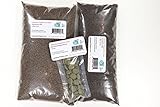
Lakeway Tilapia Pro Pack 40
A feed pack designed to raise tilapia from fry upward. It is formulated for the species, so you do not guess at protein levels. A fit if tilapia is on your list.
API 5-in-1 Test Strips
A box of test strips for common water parameters. Checking regularly helps you catch trouble early. They are cheap and quick to use.

Best Fish to Grow Aquarium for Food FAQ
What is the easiest fish to grow in an aquarium for food?
Tilapia is often the easiest fish to grow in an aquarium for food for many beginners, because it grows fast, accepts prepared pellets, and tolerates warm water. It still needs a heated tank of about 100 gallons, strong filtration, and regular water testing. If you cannot keep the water warm, a hardy cool-water species such as bluegill or yellow perch may be easier in your home. Start with one species, learn its water needs, and add more fish only when the system is stable.
How big does a tank need to be to grow fish for food?
A tank for growing fish for food usually needs to be at least 75 to 100 gallons for a small group of smaller species, and 125 to 150 gallons or more for larger species such as catfish, carp, or bass. The exact size depends on the species, the number of fish, and the filtration. A larger tank is generally more stable, because water temperature and chemistry change more slowly. Plan for adult size, not fingerling size, and do not overstock a new tank.
How long does it take to grow fish for food in an aquarium?
It typically takes 6 to 9 months for tilapia to reach a useful size, 9 to 12 months for trout, and 12 to 18 months for catfish, carp, bluegill, and perch, depending on feed, temperature, and stocking density. Bass can take 18 to 24 months. Growth is slower in cold water, with poor feed, or in a crowded tank. Regular feeding, clean water, and a stable temperature help fish grow at a typical rate for the species.
What is the best fish to grow aquarium for food?
The best fish to grow aquarium for food for most beginners is tilapia, with a typical fingerling price of $1 to $5, a tank need of about 100 gallons, and a harvest time of 6 to 9 months. If you have a cool tank, yellow perch or bluegill may fit better, and if you have a cool basement and a chiller, rainbow trout may fit better. Choose by tank size and water temperature first, then by growth time and feed, and check local laws before you buy.
FAQ
Best Fish to Grow Aquarium for Food Buying Guide and Tank Size: 75 Gallons or 150 Gallons?
Best Fish to Grow Aquarium for Food Buying Guide and Temperature: Warm, Cool, or Cold?
What is the easiest fish to grow in an aquarium for food?
How big does a tank need to be to grow fish for food?
How long does it take to grow fish for food in an aquarium?
What is the best fish to grow aquarium for food?
Related guides
- Best Fan for Grow Tent Airflow in 2026: Strong, Quiet Fans for Healthy Plants
- Best Hydroponic System for Beginners Growing in 2026: 7 Hydroponic Systems That Are Easy to Set Up, Grow Herbs and Greens Fast, and Help Beginners Succeed Without a System That Is Too Hard or Too Expensive
- Best Grow Tent Ventilation Kits for Odor Control in 2026: 7 Ventilation Kits That Remove Odor, Move Air, and Keep Your Grow Tent Fresh Without a Kit That Is Too Loud or Too Weak
- Clone Dome vs Seedling Tray Propagation in 2026: 6 Top Clone Domes and Seedling Trays for Propagation, Humidity, and Healthy Roots
More from Amazon
Programs that pair well with the guide above. Offers and eligibility are set by Amazon and may change.
Free shipping on eligible items, Prime Video and more. Eligible new members can start with a free trial.
Start a Prime free trialAudiobooks and podcasts to listen to on the go. Eligible new members can start with a free trial.
Try Audible freeAd-free music streaming. Eligible new subscribers can start with a free trial.
Try Music Unlimited freeA free business account with business pricing and bulk-buying tools for work, shop or home office.
Create a business accountAs an Amazon Associate we earn from qualifying purchases.

Write Your Review
No reviews yet. Be the first to share your experience!