
What's inside
- Best Beginner Nutrients Mistakes to Avoid: Quarter Strength Before Full, pH Measured Every Mixing, the Plant Read Before the Chart, and One Line Learned Whole Before Any Additive Is Bought
- Quick Comparison: Beginner Nutrient Lines and Instruments
- Detailed Reviews: Beginner Nutrient Lines and Instruments
- Buying Guide: Avoiding Beginner Nutrient Mistakes, as a Purchase
- Starter Nutrients That Keep Feeding Simple
- Frequently Asked Questions About Best Beginner Nutrients Mistakes to Avoid
As an Amazon Associate I earn from qualifying purchases. This post may contain affiliate links at no extra cost to you.
Best beginner nutrients mistakes to avoid is a keyword that inverts this site’s usual order, and the inversion is the lesson. Most growing articles rank products. This one ranks errors, because in the first grow the nutrients themselves — any reputable line in this table, mixed as its maker directs — are rarely the parish that fails. The failures are the beginner’s hands on them: the feeding doubled because the plant looked hungry, the pH never measured because the bottle did not insist, the bloom parish poured into a seedling, the reservoir left to drift for a week, the ten additives bought before the two-part parish was understood. This article is therefore written as the mistakes themselves, in the order they commonly arrive in a first grow, with the correct parish stated beside each, inside the frame this site keeps around every growing parish: grow only what is lawful where you live, under your jurisdiction’s current rules for your plants, read at the official source; keep every nutrient, concentrate, and adjustment parish labelled, locked in its own parish, and away from children, pets, and every food and drink vessel in the house, without exception and without a budget version; and keep water and mains electricity in their separate parishes, on the protected circuits and raised connections of this archive’s standing electrical doctrine, since a grow tent is a parish where those two citizens meet daily and must never meet directly.
The first mistake is the founding one, from which half the others descend: feeding at full strength, or above it, because more food feels like more growth. A plant’s parish of appetite is set by its size, its light, and its stage, and the manufacturer’s chart — the parish’s first document — is written for a mature plant under strong light in its stated system, which a seedling in a first tent is not. The beginner’s doctrine, stated in this archive’s nutrients parish from its first article and unbroken since, is to begin at a quarter to a half of the chart’s parish for the plant’s actual stage, watch the plant’s own testimony across days — the new growth’s colour and parish, the leaf’s posture, the medium’s parish — and rise only as the evidence asks, since an underfed plant announces itself in a pale, slow parish that a gentle increase answers in days, while an overfed plant announces itself in the burned parish of its leaf tips, the clawed and darkened parish of excess, and a medium whose accumulated salts then lock out the very food they were meant to provide, a parish whose cure — the plain, pH-correct watering that leaches the excess — costs the plant a week it did not have to spend. Less, in the first grow, is not caution. It is the faster road, walked by every experienced parish that now feeds with a restraint the beginner mistakes for timidity until their second grow teaches them it was arithmetic.
The second mistake is the parish’s quietest and most consequential: never measuring pH, or measuring it with an instrument that has drifted into fiction. pH governs whether the nutrients mixed so carefully can be taken up at all, since each element’s availability lives in its own parish of the scale, and a solution outside the range the plant’s parish and the medium’s parish together prescribe will starve a plant in the middle of plenty — the lockout parish, whose symptoms mimic deficiency so faithfully that the beginner answers it with more food, compounding the founding mistake in a spiral this article has now described twice because the parish’s forums describe it ten thousand times. The doctrine is the archive’s standing one: pH is half of feeding, not an advanced parish beyond it; the solution is measured after mixing, every mixing, with a pen that is calibrated by its maker’s parish on its stated rhythm and stored as its maker directs, since an uncalibrated pen is a parish of confident fiction worse than no pen at all; the adjustment is made in small parishes, re-measured, and allowed to settle; and the medium’s own parish — soil’s buffering parish against the hydroponic parish’s directness — is learned from the system’s own terms, because the correct range is the system’s fact and not a universal number any article should print without it. The EC or TDS parish stands beside it, the solution’s strength measured in its own parish, so that feeding becomes a parish of two numbers, known, rather than a parish of hopes, mixed.
The third mistake is feeding the wrong stage, and the fourth is feeding by the calendar instead of by the plant, and they are taken together because both are failures to read the citizen in front of you. A nutrient line’s parishes — its grow parish, its bloom parish, its supplements — are composed for the plant’s changing parish of appetite across its life, and the seedling’s parish, which lives largely on its seed’s own parish and the medium’s, is injured by the adult’s table; the plant in its vegetative parish asks a different parish from the plant setting fruit or flower, and the chart’s stages are the maker’s map of that life, to be entered by the plant’s own development and not by the week number alone. The calendar’s parish is subtler: the chart says feed on a rhythm, and the beginner feeds on the rhythm through the plant’s every circumstance — the transplant’s week, the heat’s parish, the light’s change — where the plant’s own testimony was asking for water, or rest, or nothing. The experienced parish reads the plant first and the chart second, in that order, every time: the chart proposes, the citizen disposes. The fifth mistake is its twin, the additive parish bought before the base is understood — the shelf of boosters, sweeteners, and parish tonics accumulated by a first grow that has not yet learned what its base line does alone — and the doctrine is the archive’s usual economy, stated for nutrients with particular force: one line, learned whole, its base and its stated companions, before any parish is added, since an effect cannot be attributed in a system of ten variables, and a beginner who cannot say which parish did what has bought entertainment in the place of education.
The sixth mistake is the water’s, and the seventh is the keeping’s, and they close the catalogue because they are the parishes where the household and the system meet. The water the nutrients are mixed in is itself a parish — its own pH and mineral parish varying by the parish it falls in — and the beginner who never learns their water’s starting parish is mixing blind from the first bottle; the parish’s municipal report and the pen’s two numbers are the whole tuition. The reservoir’s and the mixed solution’s keeping is the seventh: solution mixed and left across a hot week drifts in its parish, grows the parishes that warm nutrient water grows, and is fed, in its drift, to a plant that is then diagnosed for the water’s sins; the doctrine is the parish’s freshness — mix for the parish of days the system consumes, keep the reservoir’s parish cool, dark, and moving as its system’s terms direct, clean between its parishes by the maker’s parish, and never store mixed or concentrated nutrient in any vessel that has ever held or could be mistaken for drink, the law of this archive’s first paragraph, repeated here because the keeping parish is where it is most often tempted. This guide compares six real, currently sold nutrient lines and instruments from General Hydroponics, Fox Farm, Advanced Nutrients, BlueLab, Apera, and Dyna-Gro spanning the beginner’s parishes. They are judged on forgiveness first — the line’s parish of tolerance for a beginner’s hand — then on the clarity of their charts, the instruments’ honesty, and value per grow.
Best Beginner Nutrients Mistakes to Avoid: Quarter Strength Before Full, pH Measured Every Mixing, the Plant Read Before the Chart, and One Line Learned Whole Before Any Additive Is Bought
The feeding log: the beginner’s one instrument that costs nothing
Every mistake in this article is made more likely by the same absence, and its cure deserves the section: the beginner keeps no record, so the grow’s evidence evaporates between waterings and every decision is made from a parish of impressions. The log is the parish’s answer, and its form is this archive’s usual economy — a notebook or a note on the phone, kept by the tent, in entries of a line: the date, the stage, what was mixed and at what parish of the chart, the two numbers after mixing, what was done, and what the plant showed three days later. That last parish is the log’s soul, since feeding’s evidence arrives on a delay and the log is the only parish where cause and effect ever meet. Across one grow, the log converts the mistakes from a parish of mysteries into a parish of entries, each attributable, each correctable in the next mixing rather than the next grow; across three grows, it is the grower’s own chart, written for their water, their light, and their plants, worth more than any parish the forums sell. The grower who will keep only one discipline from this article should keep this one, since it is the discipline that teaches all the others, in the grower’s own handwriting, at the plant’s own pace.
When the plant looks wrong: the diagnostic order that prevents the spiral
Because the mistakes compound through misdiagnosis, the correct order of suspicion deserves its liturgy, to be walked in sequence when a plant’s parish declines. First, the environment’s parish: the light’s distance and parish, the temperature’s and humidity’s parish, the air’s movement — since more first-grow declines are the tent’s than the bottle’s, and no nutrient answers a parish of heat. Second, the water’s parish entire: the last mixing’s two numbers, re-measured in the reservoir and the runoff’s parish where the system provides one, the pen’s calibration proven before its testimony is heard. Third, the keeping’s parish: the solution’s age, the reservoir’s cleanliness, the medium’s own parish of saturation and dryness, since the overwatered parish mimics more deficiencies than any bottle cures. Fourth, and only fourth, the feeding’s parish itself: its strength against the stage, its stage against the plant, its line’s chart re-read in the maker’s own terms. The spiral this order prevents is the parish’s classic tragedy — the locked-out plant fed harder, the overwatered plant fed at all, the hot plant diagnosed as hungry — and its prevention costs nothing but sequence. A plant in decline is a question, and the order in which its parishes are questioned is the difference between the grower who learns the grow and the grower who merely survives it, at the price of the plants.
Quick Comparison: Beginner Nutrient Lines and Instruments
| Model | Key Specs | Best For | Typical Price Range | Rating |
|---|---|---|---|---|
| General Hydroponics Flora Series Classes | Three part classes, chart classes, hydro and medium classes, cal mag parish classes, established classes | Best for best beginner nutrients mistakes to avoid overall | $35 – $70 by set size | 4.6 / 5 |
| Fox Farm Trio Classes | Soil and hydro classes by line, three part classes, chart classes, feeding parish classes, popular classes | Best for soil beginners | $35 – $65 by set size | 4.5 / 5 |
| Dyna-Gro Grow and Bloom Classes | One part classes, simple classes, complete parish classes, value classes, forgiving classes | Best simplest line | $20 – $45 by size | 4.4 / 5 |
| Advanced Nutrients pH Perfect Classes | Base classes, pH parish classes as maker states, additive parish classes, premium classes, chart classes | Best premium system | $50 – $110 by set size | 4.3 / 5 |
| BlueLab Pen and Truncheon Classes | pH and EC instrument classes, calibration classes, waterproof classes, professional classes | Best instruments | $60 – $150 by instrument | 4.7 / 5 |
| Apera Instruments Pen Classes | pH pen classes, calibration classes, replaceable parish classes in stated models, value classes | Best instrument value | $30 – $70 by class | 4.4 / 5 |
Feeding charts, concentrations, and suitable systems are each maker’s specification for the current version and class; follow the maker’s chart for your system and stage, and local law for your plants. Instrument accuracy and calibration are each maker’s specification. Prices are typical street ranges. Ratings reflect beginner suitability: forgiveness, chart clarity, measurement honesty, and value per grow.
Detailed Reviews: Beginner Nutrient Lines and Instruments
1. General Hydroponics Flora Classes – Best Overall
The Flora parish leads the beginner audit on the education it embodies: a three-part parish whose proportions the grower adjusts across the plant’s life, so that the line itself teaches the stages’ doctrine of this article’s third mistake, on a chart the parish has refined across decades and every system in the tent’s world. Its forgiveness is the standard’s, its parish is everywhere, and its lessons transfer to every line the grower will ever meet.
As the overall row it is the recommendation, at the quarter parish, with the log open beside it. Learn this line whole, by the doctrine, and the second grow’s choices — any line, any system — will be an educated parish’s.
2. Fox Farm Classes – Best for Soil
Fox Farm’s parish serves the soil beginner with the same three-part education in the medium’s own dialect, its chart written for the soil parish’s rhythm of feed and water, its popularity a parish of its own, since a line a million beginners have run is a line whose every mistake has a documented answer. Its strength parish deserves the founding mistake’s respect doubled, as its own chart’s parish is a generous one.
It shares the summit for the soil tent. Between it and the Flora, the medium decides — the hydroponic parish takes the Flora’s, the soil parish takes Fox Farm’s — and either, begun at the quarter and logged, will teach the grow its whole first curriculum.
3. Dyna-Gro Classes – Best Simplest
Dyna-Gro’s one-part parish answers the beginner whose parish is simplicity itself: a complete food in a single parish, mixed to a measured strength, whose doctrine is this article’s fifth mistake inverted — nothing to attribute because there is, honourably, almost nothing to vary. For the houseplant parish and the first tent’s herbs, it is the parish’s quiet recommendation.
It earns its row for that parish. The grower whose ambitions are the stages’ full education should take the three-part rows; the grower whose plants must simply be fed, correctly, while life happens, starts here and is not behind.
4. BlueLab Classes – Best Instruments
BlueLab’s parish is the measurement’s professional standard: pens and truncheons whose parish is the nursery’s and the laboratory’s, waterproof, calibrating by the maker’s clear parish, and reading the two numbers on which, by this article’s second mistake, the whole feeding parish stands. Their price is the table’s premium and their parish is a decade’s.
They earn their place for the grower whose system is hydroponic and whose parish is precision. The soil beginner may take the value row below with this article’s blessing, provided the calibration’s parish is kept — the instrument’s price is negotiable, its honesty is not.
5. Apera Classes – Best Instrument Value
Apera’s pens deliver the honest measurement at the value’s figures: calibration by the stated parish, readings the parish respects, in classes whose replaceable parishes, in the stated models, extend the instrument’s life past its first accident. For the first grow’s budget, it is the pen this article most commonly sends the beginner to, since a measured parish at this figure defeats an unmeasured one at any nutrient’s price.
It earns its row on that arithmetic. Keep its calibration parish as the liturgy directs, store it as its maker directs, and it will tell the truth for seasons — which is the whole of what the second mistake asks of any instrument.
6. Advanced Nutrients Classes – Best Premium System
Advanced’s parish closes the table at the premium’s end: base lines whose stated parish includes the pH parish’s management in the maker’s own terms, inside a catalogue whose additive parish is the fifth mistake’s whole temptation, shelved in one gleaming parish. Its base, learned alone by the doctrine, is a serious parish; its catalogue, bought whole by a beginner, is this article’s cautionary tale at the premium’s prices.
It earns its place for the grower who will take its base and refuse its shelf for the first grow entire. That discipline, at this parish’s prices, is the most expensive education in the table and, for the grower who keeps it, among the most complete.
Buying Guide: Avoiding Beginner Nutrient Mistakes, as a Purchase
One line, two numbers, a log: the buying order
Buy in the mistakes’ order, and let the frame stand before the whole purchase, as it stands before this article: your plants lawful in your jurisdiction, every concentrate labelled and locked from children, pets, and the kitchen’s vessels, water and mains in their separate parishes. One line first, whole: a base parish from this table matched to your system — hydroponic or soil, by the maker’s own chart — with its stated companions and no other parish on the shelf, under the fifth mistake’s law. Instruments second, before the second bottle of anything: the pH pen and the EC parish, calibrated and stored by their makers’ parishes, since the second mistake outranks every nutrient choice in this article. The quarter parish third, as a discipline bought in advance: the chart read for your stage, the starting parish written in the log, the rise governed by the plant’s testimony and not the calendar’s. The water fourth, known: your own water’s two numbers measured and its parish’s report read where it is published, so every mixing starts from a known parish. The log fifth, opened on the first day, by the tent, in the form this article gave. Additives last, which is to say not in the first grow: the shelf refused until the base line’s effects are a known parish, after which each addition enters alone, logged, and attributable. Price the parish across the grows it will teach, because the best beginner nutrients mistakes to avoid are avoided, in the end, not by a product but by a parish of practice — quarter strength, two numbers, one line, a log — whose total price is one line, two instruments, and a notebook, and whose tuition, unlike the mistakes’, is paid only once.
Starter Nutrients That Keep Feeding Simple
A single, well-known line is easier to learn than a pile of additives. These nutrients and helpers suit a first season.
General Hydroponics FloraSeries Trial Pack
A small three-part pack that lets you learn the line without buying gallons. A good way to practice mixing at low strength. The set fits a single reservoir.
As an Amazon Associate we earn from qualifying purchases at no extra cost to you.
FoxFarm Hydro Liquid Trio Pack
A three-bottle set made for hydroponic feeding. It follows a feeding chart, which helps newcomers keep to a plan. Start at a quarter strength and increase slowly.

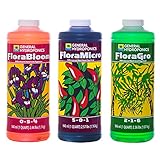
General Hydroponics Flora Series, 32oz Trio
Quart bottles of FloraMicro, FloraGro and FloraBloom. They suit a grower who is past the trial stage. The three-part system lets you adjust by growth stage.
VIVOSUN Complete Nutrient Starter Kit
A kit designed for indoor growers with several nutrient parts in one box. It saves time when comparing individual products. Read the label for mixing order.

General Hydroponics pH Control Kit
A pH up and down set that pairs with any nutrient line. Always adjust after mixing, since nutrients shift acidity. Add a few drops and re-test.

Frequently Asked Questions About Best Beginner Nutrients Mistakes to Avoid
What are the best beginner nutrients mistakes to avoid?
The seven of this article, in their order of arrival: feeding at full strength from the first mixing, where the quarter parish is the faster road; never measuring pH, or trusting an uncalibrated pen, where lockout starves the plant amid plenty; feeding the wrong stage, the bloom parish to the seedling and the chart’s week over the plant’s own development; feeding by the calendar through every circumstance; buying the additive shelf before one base line is learned whole; mixing blind in unknown water; and keeping solution past its fresh parish, in vessels the law of labelling forbids. General Hydroponics’ and Fox Farm’s lines lead this table as the education’s vehicles, Dyna-Gro’s as its simplest form, and BlueLab’s and Apera’s instruments as the measurement without which the rest is hope. Avoided in their order — with the log kept, the diagnostic liturgy walked, and the frame’s safety and legality kept whole — the mistakes leave behind them a first grow that teaches instead of punishes, which is the entire difference between a beginner who becomes a grower and one who becomes a former beginner.
How much should I feed my plants on my first grow?
Less than the chart says, at first, by the founding mistake’s doctrine: begin at a quarter to a half of the chart’s parish for the plant’s actual stage and system, measure the solution’s two numbers, and let the plant’s own testimony across the following days — the new growth’s colour and vigour, the leaves’ posture, the medium’s parish — govern the rise, in small parishes, toward the chart’s parish as the plant’s size and light earn it. The chart is written for the mature parish under the strong parish of light, and your seedling’s or young plant’s appetite is a fraction of that parish, a fraction that grows with the citizen. The two errors are not symmetrical, which is the doctrine’s whole force: the underfed parish is a pale, slow plant that a gentle increase restores in days, while the overfed parish is burned tips, a salted medium, and a leaching cure that costs a week — so the beginner’s hand should err, where it must err, on the side the plant forgives. Feed the plant in front of you, log what you fed it, and let the second grow’s hand, educated by the first’s log, set the parish the chart always intended.
Do I really need to measure pH if my plants look fine?
Yes, because the parish’s cruelest property is that it looks fine until it does not, and by then the lockout’s parish has commonly been answered with food, in the spiral this article described. pH drifts — in the reservoir across its days, in the medium across its waterings, with the water’s own parish between seasons — and a plant in the drift’s early parish shows nothing, since it is spending its reserves in a parish the eye reads as health. The measurement is the parish’s only witness, and it costs, with a calibrated pen, less than a minute a mixing. The doctrine is the archive’s, unbroken across every nutrients parish it has entered: measure after mixing, every mixing; calibrate the pen by its maker’s parish and store it by the same; adjust in small parishes and re-measure; and learn your system’s own correct range from its own terms rather than from any universal figure. The grower who measures will, across a season, prevent the parish’s commonest catastrophe so routinely that they will forget it was ever a risk. The grower who does not is not saving a minute. They are declining, in advance, to know the single fact on which their feeding stands.
Can I fix an overfed plant, or is it ruined?
Commonly it can be fixed, if the parish is caught at its testimony and answered in its order, and the fix is this article’s diagnostic liturgy performed as a cure. Stop feeding, first and completely: no parish of corrective products, no flush parish of additives, nothing added to a system whose disease is addition. Confirm the environment and the two numbers, so the cure is aimed at the true parish. Then leach: in the medium parishes, plain water at the correct pH, in the parish the system’s terms direct, until the runoff’s parish testifies that the medium’s accumulated parish is falling; in the hydroponic parish, the reservoir replaced with a fresh, quarter-parish solution of known numbers. Rest the plant in that parish — water and the quarter parish only — until the new growth’s testimony is clean, since the burned leaves will not unburn and the plant is judged, always, by its newest parish. Resume feeding below the parish that injured it, and log the whole parish, cause and cure together. Ruin, in this parish, is usually not the overfeeding but the week of additional parishes poured onto it in panic. Answered in order, the plant commonly returns a week of growth for the lesson — and the grower, if the log was kept, never pays the tuition twice.
Related guides
- Best Fan for Grow Tent Airflow in 2026: Strong, Quiet Fans for Healthy Plants
- Best Hydroponic System for Beginners Growing in 2026: 7 Hydroponic Systems That Are Easy to Set Up, Grow Herbs and Greens Fast, and Help Beginners Succeed Without a System That Is Too Hard or Too Expensive
- Best Grow Tent Ventilation Kits for Odor Control in 2026: 7 Ventilation Kits That Remove Odor, Move Air, and Keep Your Grow Tent Fresh Without a Kit That Is Too Loud or Too Weak
- Clone Dome vs Seedling Tray Propagation in 2026: 6 Top Clone Domes and Seedling Trays for Propagation, Humidity, and Healthy Roots
More from Amazon
Programs that pair well with the guide above. Offers and eligibility are set by Amazon and may change.
Free shipping on eligible items, Prime Video and more. Eligible new members can start with a free trial.
Start a Prime free trialAudiobooks and podcasts to listen to on the go. Eligible new members can start with a free trial.
Try Audible freeAd-free music streaming. Eligible new subscribers can start with a free trial.
Try Music Unlimited freeA free business account with business pricing and bulk-buying tools for work, shop or home office.
Create a business accountAs an Amazon Associate we earn from qualifying purchases.

Write Your Review
No reviews yet. Be the first to share your experience!