
What's inside
As an Amazon Associate I earn from qualifying purchases. This post may contain affiliate links at no extra cost to you.
Spectrum is the colour of the light, not just how bright it is. A light can be bright and still be wrong for plants, if it is the wrong colour. A light can be dim and still grow plants, if it is the right colour. For aquarium plants, the right spectrum is the one that gives plants the blue and red light they use for photosynthesis, with enough green and white light to penetrate water and to show true colours.
That is why a full-spectrum light, or a WRGB light, works better than a white-only light, or a blue-only light, for most aquarium plants. A full-spectrum light includes red, green, blue, and white LEDs. A WRGB light includes white, red, green, and blue LEDs, with a stronger red and blue output. Both give plants the wavelengths they need, and both show fish colours well.
Our top pick is the Finnex Planted+ 24/7 HLC. It is a 36-inch light, with a wattage of about 27W, a spectrum that includes red, green, blue, and white LEDs, a colour temperature of about 6500K, and a built-in 24/7 timer. It gives you a full spectrum without a separate controller, and it is the easiest light in this guide to set for aquarium plants.
The ratings below are editorial assessments based on spectrum, wattage, length, timer control, and value. They are not customer-star averages. Prices are typical retail ranges, not fixed prices, and they vary by retailer.
Our Top Picks
 LUKAWES 2 Pack Aquarium Plants for Fish Tank0.6 x 4.6 x 6.3 inches0.6 x 4.6 x 6.3 inches0 poundsCheck on Amazon
Best Spectrum for Growing Aquarium Plants Compared
| Light | Length | Wattage | Spectrum | Timer | Typical price range | Rating |
|---|---|---|---|---|---|---|
| Finnex Planted+ 24/7 HLC 36 in | 36 in | 27W | RGB + white, 6500K | Built-in 24/7 | $80–$110 | 4.8 / 5 |
| Fluval Plant 3.0 24-34 in | 24-34 in | 32W | Full spectrum RGB | App control | $150–$200 | 4.7 / 5 |
| Chihiros WRGB II 60 | 60 cm, 24 in | 45W | WRGB | App control | $150–$200 | 4.6 / 5 |
| Current USA Satellite Plus PRO 36-48 in | 36-48 in | 27W | RGB + white, 6500K | Built-in timer | $80–$120 | 4.6 / 5 |
| Hygger 24/7 Lighting Aquarium Light 30-36 in | 30-36 in | 22W | RGB + white, 6500K | Built-in 24/7 | $40–$60 | 4.5 / 5 |
LUKAWES 2 Pack Aquarium Plants for Fish Tank Easy Growing Real Carpet Decor for Fish Tank


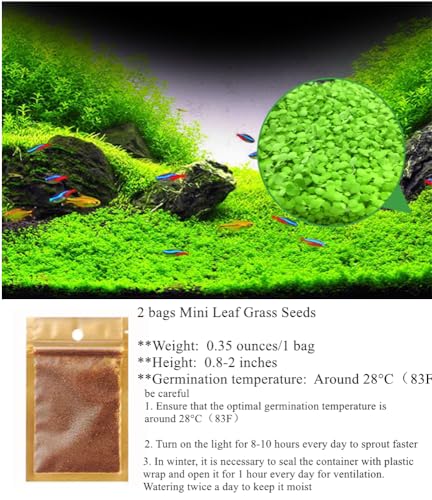


As an Amazon Associate we earn from qualifying purchases. Product prices and availability are accurate as of the date/time indicated.
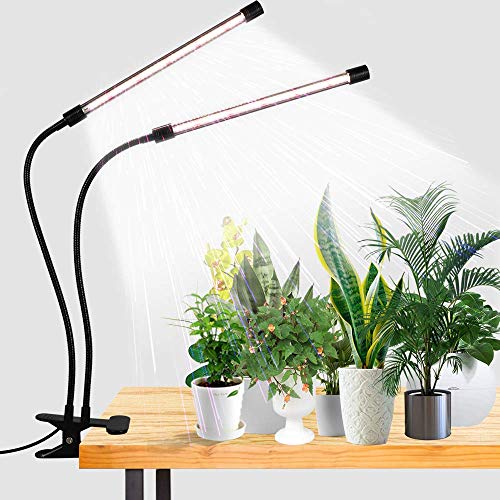
GooingTop Grow Light,6000K Full Spectrum Indoor Plant Growing Lamp | Desk Lamp with White Red LEDs for Indoor Plants,Clamp with Flexible Gooseneck,Brightness Adjustable,Auto Timer 4 8 12Hrs
As an Amazon Associate we earn from qualifying purchases. Product prices and availability are accurate as of the date/time indicated.

Live Aquarium Plants Variety Pack – Shore Aquatic Easy Beginner 9-Bundle Package | Freshwater Tank Starter Kit, Hardy Low-Light Aquatic Plants


As an Amazon Associate we earn from qualifying purchases. Product prices and availability are accurate as of the date/time indicated.
Prices shown are approximate and for reference only. Prices change often, so please check the current price on Amazon before you buy.
Best Spectrum for Growing Aquarium Plants: What Plants Actually Use
Aquarium plants use light for photosynthesis, which is how they turn carbon dioxide and water into sugars and oxygen. They do not use all wavelengths equally. They use blue light, at about 400 to 500 nanometres, and red light, at about 620 to 700 nanometres, most efficiently. They use green light, at about 500 to 600 nanometres, less efficiently, but green light penetrates water deeper than blue or red light, so it reaches lower leaves.
That is why a spectrum that includes blue, red, green, and white is better than a spectrum that includes only white, or only blue, or only red. A white-only light at 6500K includes blue and red, because white light is a mix of wavelengths, but it does not include as much red as a WRGB light, which is why red plants often look green under a white-only light, and why they turn red under a WRGB light with more red output.
Blue light: 400 to 500 nm, compact growth
Blue light helps plants grow compact, with short stems and small leaves, instead of tall, leggy stems with large leaves. It also helps plants produce chlorophyll, which is the pigment that makes leaves green. A light with enough blue, at about 400 to 500 nm, will give you compact, healthy plants, with good colour.
Too much blue, without enough red, will give you compact plants that grow slowly, and it can encourage algae, especially green algae on the glass. A balanced spectrum, with blue and red, is better than a blue-only spectrum. A 6500K white light has a good amount of blue, which is why it is a good starting point for aquarium plants.
Red light: 620 to 700 nm, photosynthesis and red plants
Red light is used most efficiently for photosynthesis, and it is essential for red plants, like Alternanthera reineckii, Ludwigia repens, and Rotala rotundifolia, to show red colour. Without enough red light, at about 620 to 700 nm, red plants will turn green, and they will grow slowly.
A WRGB light, like the Chihiros WRGB II, has a stronger red output than a standard white light, which is why it is popular for red plants. A full-spectrum light, like the Fluval Plant 3.0, also has a strong red output, with adjustable red, green, blue, and white channels, so you can increase red if you want more colour, or decrease it if you get algae.
Too much red, without enough blue, will give you tall, leggy plants, with large leaves, and it can also encourage algae, especially red algae on the leaves. A balanced spectrum, with red and blue, is better than a red-only spectrum.
Green and white light: 500 to 600 nm and 6500K, depth and colour
Green light, at about 500 to 600 nm, penetrates water deeper than blue or red light, so it reaches lower leaves that would otherwise be shaded by upper leaves. It also helps show true colours, because a light with only blue and red looks purple, and it makes fish look unnatural. A light with green and white, in addition to blue and red, looks natural, and it shows fish colours well.
White light at about 6500K is daylight, and it is a good balance of blue, green, and red. It is the colour temperature most aquarium plant lights use as a starting point, because it is bright, it looks natural, and it supports plant growth. A light at 3000K looks yellow, and it does not have enough blue. A light at 10000K looks blue, and it does not have enough red. A 6500K light, with additional red and blue LEDs, is the best spectrum for most aquarium plants.
Best Spectrum for Growing Aquarium Plants Reviews
1. Finnex Planted+ 24/7 HLC 36 in: Best Overall Spectrum for Aquarium Plants
The Finnex Planted+ 24/7 HLC is a 36-inch light with a wattage of about 27W, a spectrum that includes red, green, blue, and white LEDs, and a colour temperature of about 6500K. It has a built-in 24/7 timer that mimics sunrise, daylight, sunset, and moonlight, with a dimmer light in the morning and evening, and a brighter light in the middle of the day.
For spectrum, the Finnex gives you a full spectrum without a separate controller. The red LEDs help red plants show colour, the blue LEDs help plants grow compact, and the white LEDs give you a natural daylight look. The 24/7 timer also helps, because it gives plants 8 to 10 hours of useful light, with a gradual ramp up and down, instead of a sudden on and off, which can stress fish and plants.
At $80 to $110, it is not the cheapest light here, but it is the easiest to use. If you want a full spectrum with a timer built in, and you do not want to use an app, the Finnex is the best choice.
2. Fluval Plant 3.0 24-34 in: Best App-Controlled Spectrum
The Fluval Plant 3.0 is a 24- to 34-inch light with a wattage of 32W, a full spectrum with adjustable red, green, blue, and white channels, and app control via Bluetooth. It lets you set a custom spectrum, with different colours and intensities at different times of day, from your phone.
For spectrum, the Fluval is the most flexible light in this guide. You can increase red if you want more colour on red plants, increase blue if you want more compact growth, or decrease both if you get algae. You can also set a 24/7 cycle, with sunrise, daylight, sunset, and moonlight, like the Finnex, but with more control.
At 32W, it is the second-brightest light here, after the Chihiros WRGB II, and it is the best choice for a high-tech tank with CO2, where you need more light and more spectrum control to grow demanding plants. At $150 to $200, it is also the most expensive light here, along with the Chihiros. If you do not need app control, the Finnex is simpler and cheaper.
3. Chihiros WRGB II 60: Best WRGB Spectrum for Red Plants
The Chihiros WRGB II 60 is a 60-centimetre light, about 24 inches long, with a wattage of about 45W, a WRGB spectrum, and app control. WRGB means white, red, green, and blue, with a stronger red and blue output than a standard white light. It is the brightest light in this guide, and it is the best choice for red plants.
For spectrum, WRGB is different from full spectrum. A full-spectrum light, like the Fluval, has a balanced output across all wavelengths. A WRGB light has a stronger output in red and blue, which helps red plants show colour, and which helps plants photosynthesise more efficiently. It also makes fish colours look more vivid, especially red fish like tetras and guppies.
The trade-off is that WRGB can grow algae faster than a balanced full spectrum, if you use it at full intensity without enough CO2. Use it at 70 to 80 percent intensity, with CO2 at 20 to 30 ppm, and with a photoperiod of 8 hours, not 12 hours. At $150 to $200, it is priced similarly to the Fluval, but it is brighter and it is better for red plants.
4. Current USA Satellite Plus PRO 36-48 in: Best Spectrum for Larger Tanks
The Current USA Satellite Plus PRO is a 36- to 48-inch light with a wattage of about 27W, a spectrum that includes red, green, blue, and white LEDs, and a colour temperature of about 6500K. It has a built-in timer, with a 24/7 cycle, and it fits a larger tank than the Finnex 36-inch light.
For a 40-gallon breeder, a 55-gallon, or a 75-gallon tank, the Satellite Plus PRO is a good choice because it is long enough to cover the whole tank without dark spots at the ends. Its spectrum is similar to the Finnex, with RGB and white, and a 6500K colour temperature, which is a good balance for most aquarium plants.
At $80 to $120, it is priced similarly to the Finnex, but it is longer. If your tank is 36 inches or longer, buy a light that is long enough to cover it, not a short light that leaves the ends in shadow, because plants in shadow will not grow, and algae will grow in the bright spots.
5. Hygger 24/7 Lighting Aquarium Light 30-36 in: Best Budget Spectrum
The Hygger 24/7 is a 30- to 36-inch light with a wattage of about 22W, a spectrum that includes red, green, blue, and white LEDs, and a colour temperature of about 6500K. It has a built-in 24/7 timer, with sunrise, daylight, sunset, and moonlight, like the Finnex, but it costs $40 to $60, about half the price.
At 22W, it is less bright than the Finnex or the Fluval, which makes it a good choice for a low-tech tank without CO2, where a bright light would grow algae. Its spectrum is still full, with RGB and white, so it will grow plants, just more slowly than a brighter light.
The trade-off is build quality and app control. It does not have the same app control as the Fluval or the Chihiros, and it does not have the same warranty as the Finnex. If you are on a tight budget and you want a full spectrum with a 24/7 timer, the Hygger is a reasonable starting point.
Best Spectrum for Growing Aquarium Plants Buying Guide
Start with spectrum, then intensity, then photoperiod. A good spectrum for growing aquarium plants should include blue at 400 to 500 nm, red at 620 to 700 nm, green at 500 to 600 nm, and white at about 6500K. Every light in the table meets that test, with RGB and white, or with WRGB. The differences are in how much control you have over the spectrum, how bright the light is, and how much it costs.
Full spectrum vs WRGB vs 6500K
Full spectrum means the light includes all wavelengths, from blue to red, in a balanced output. It is a good starting point for most aquarium plants, because it gives plants what they need without overdoing any one colour. A 6500K white light is a type of full spectrum, because white light is a mix of wavelengths, but a 6500K light with additional red and blue LEDs is better than a 6500K light with only white LEDs.
WRGB means white, red, green, and blue, with a stronger red and blue output. It is better for red plants, and it is better for showing fish colours, but it can grow algae faster if you use it at full intensity without enough CO2. Use WRGB at 70 to 80 percent intensity, with CO2, and with a photoperiod of 8 hours.
Do not buy a light that is only blue, only red, or only white, for aquarium plants. A blue-only light will give you compact plants that grow slowly. A red-only light will give you tall, leggy plants. A white-only light will grow plants, but it will not show red colours well, and it will not give you as much control as a full-spectrum or WRGB light.
Intensity, PAR, and photoperiod
Intensity is how bright the light is, measured in PAR, or photosynthetically active radiation, at the substrate. For a low-tech tank without CO2, use a PAR of 30 to 50 at the substrate. For a high-tech tank with CO2, use a PAR of 50 to 80 at the substrate. A brighter light without CO2 will grow algae, not plants.
Photoperiod is how long the light is on each day. For aquarium plants, 8 to 10 hours is best. Less than 6 hours, and growth will be slow. More than 12 hours, and algae will grow faster than plants. Use a timer, so the light is on for the same hours every day. A 24/7 timer, like the one built into the Finnex and the Hygger, is ideal, because it mimics sunrise and sunset.
Start with a moderate intensity, at 70 percent, and a photoperiod of 8 hours. If plants grow slowly, increase intensity or photoperiod by 1 hour. If algae grows, decrease intensity or photoperiod by 1 hour. Adjust slowly, one change at a time, and wait a week before you make another change.
Best Spectrum for Growing Aquarium Plants FAQ
What is the best spectrum for growing aquarium plants?
The best spectrum for growing aquarium plants for most tanks is a full spectrum, or WRGB, with blue at 400 to 500 nm, red at 620 to 700 nm, green at 500 to 600 nm, and white at about 6500K. A full spectrum gives plants the wavelengths they need for photosynthesis, with a natural daylight look. A WRGB spectrum gives you more red and blue, which is better for red plants, but it can grow algae faster if you use it at full intensity without CO2.
Is 6500K good for aquarium plants?
Yes. A 6500K light is daylight, and it is a good starting point for aquarium plants, because it has a good balance of blue, green, and red. A 6500K light with additional red and blue LEDs, like the Finnex Planted+ 24/7 HLC, is better than a 6500K light with only white LEDs, because it gives plants more red for photosynthesis and more blue for compact growth.
Do red aquarium plants need more red light?
Yes. Red plants like Alternanthera reineckii, Ludwigia repens, and Rotala rotundifolia need more red light, at about 620 to 700 nm, to show red colour. Without enough red light, they will turn green. A WRGB light, like the Chihiros WRGB II, has a stronger red output than a standard white light, and it is the best choice for red plants. Use it with CO2 at 20 to 30 ppm, and with a photoperiod of 8 hours.
How long should aquarium plant lights be on each day?
Aquarium plant lights should be on for 8 to 10 hours a day. Less than 6 hours, and growth will be slow. More than 12 hours, and algae will grow faster than plants. Use a timer, so the light is on for the same hours every day. A 24/7 timer, with sunrise, daylight, sunset, and moonlight, is ideal, because it mimics natural light and it gives plants a gradual ramp up and down.
FAQ
What is the best spectrum for growing aquarium plants?
Is 6500K good for aquarium plants?
Do red aquarium plants need more red light?
How long should aquarium plant lights be on each day?
Related guides
- Plant Nutrients: 6 Best Plant Nutrients for Indoor Growing in 2026
- Best Thermometer vs Temperature Controller Growing in 2026: Which One Do You Need for a Grow Tent?
- Common Mistakes Placing Fans in Tents in 2026: 7 Mistakes That Hurt Airflow, Damage Plants, and Waste Money in Grow Tents
- Best Grow Tent for Succulents Indoors in 2026: Small 2×2 Grow Tents for Succulents and Cacti
More from Amazon
Programs that pair well with the guide above. Offers and eligibility are set by Amazon and may change.
Free shipping on eligible items, Prime Video and more. Eligible new members can start with a free trial.
Start a Prime free trialAudiobooks and podcasts to listen to on the go. Eligible new members can start with a free trial.
Try Audible freeAd-free music streaming. Eligible new subscribers can start with a free trial.
Try Music Unlimited freeA free business account with business pricing and bulk-buying tools for work, shop or home office.
Create a business accountAs an Amazon Associate we earn from qualifying purchases.

Write Your Review
No reviews yet. Be the first to share your experience!