
What's inside
- Why the Best Insulation for Cold Weather Tents Needs Reflective Foil and Sealed Seams
- Best Insulation for Cold Weather Tents Comparison Table
- Best Insulation for Cold Weather Tents Reviews for 2026
- Buying Guide: How to Choose the Best Insulation for Cold Weather Tents in 2026
- Frequently Asked Questions About the Best Insulation for Cold Weather Tents
As an Amazon Associate I earn from qualifying purchases. This post may contain affiliate links at no extra cost to you.
Choosing the best insulation for cold weather tents is one of the most practical decisions a grower can make when temperatures fall. A grow tent in a garage, basement, shed, or unheated room loses heat through its fabric walls, its floor, and its duct ports. Without insulation, a heater cycles more often, leaf temperature drops overnight, humidity swings widen, and growth slows. With the right insulation, the same tent holds heat longer, uses less energy, and stays closer to the temperature range your plants prefer.
For most indoor growers, the best insulation for cold weather tents is a reflective bubble insulation that can be cut to fit the outside of the tent, taped at the seams, and removed in spring. Reflective foil faces heat back into the tent, the trapped air in the bubbles slows heat transfer, and the material is light enough to hang without stressing the tent frame. It does not replace a heater, a thermostat, or a safe electrical setup, but it makes every one of those tools work better.
This guide focuses on grow tents used in cold weather, not on mountaineering tents or emergency shelters. The principles overlap, but the products, the safety concerns, and the installation are different. A grow tent already has lights, fans, and wiring inside it, so insulation must stay clear of hot lamps, must not block intake and exhaust vents, and must not create a fire risk. Always follow the heater and light manufacturers’ clearance instructions, keep insulation away from exposed heating elements, and check the tent daily for condensation.
Our Top Picks
 Insulated Winter Hot Tent with Stove Jack 5-6X-Large110.2 x 110.2 x 86.6 inches27.2 poundsCheck on Amazon
Why the Best Insulation for Cold Weather Tents Needs Reflective Foil and Sealed Seams
Heat leaves a grow tent in three ways: conduction through the fabric, air leaks around zippers and ports, and radiation from warm surfaces inside. Reflective bubble insulation addresses the first and third problems. The foil layer reflects radiant heat back toward the plants, while the bubble layer creates small pockets of still air that slow conduction. It is not the same as thick fibreglass or foam board, and its R-value is modest, but it is thin, flexible, and easy to fit around a tent that must still be opened every day.
Sealing matters almost as much as the material itself. A large insulated panel with gaps at the corners still lets cold air in. Growers who get the best results cut panels for each wall, overlap them by a few inches, tape the joints with foil tape, and insulate the roof as well as the sides. The floor deserves attention too. A cold concrete floor pulls heat out of pots and root zones faster than cold air does, so a layer of insulation or a raised pallet under the tent can make a visible difference to soil temperature.
Condensation is the trade-off to watch. Insulation keeps warm, moist air inside, and if the outer surface of the insulation is cold, moisture can collect there. That is why ventilation, a dehumidifier when needed, and regular checks matter. Insulation should be installed on the outside of the tent where possible, so moisture from inside the tent does not get trapped between the insulation and the tent fabric. If you insulate inside, leave the intake and exhaust paths clear and inspect behind the panels at least once a week.
Best Insulation for Cold Weather Tents Comparison Table
Use this table to compare six real, currently sold insulation rolls that growers use on cold-weather tents. Material, size, R-value, thickness, and format are manufacturer-listed values for the standard roll. Price ranges reflect typical retail pricing in 2026 rather than a single store price. Ratings summarize typical retailer user feedback for ease of cutting, heat retention, durability, and value.
| Insulation for Cold Weather Tents | Material | Roll Size | R-Value | Thickness | Typical Price Range | Rating |
|---|---|---|---|---|---|---|
| Reflectix BP24010 24″ x 10′ Bubble Insulation | Polyethylene bubble with aluminium foil | 24 in x 10 ft | About R-1.1 | About 5/16 in | $15-$20 | 4.6 / 5 |
| Duck Brand Double Bubble Reflective Insulation | Polyethylene bubble with aluminium foil | 24 in x 25 ft | About R-1.1 | About 5/16 in | $20-$25 | 4.5 / 5 |
| US Energy Products Double Bubble Reflective Foil Insulation | Polyethylene bubble with aluminium foil | 48 in x 25 ft | About R-1.1 | About 5/16 in | $25-$30 | 4.6 / 5 |
| AstroShield Reflective Insulation Roll | Polyethylene bubble with aluminium foil | 48 in x 25 ft | About R-1.1 | About 3/16 in | $35-$45 | 4.5 / 5 |
| SmartSHIELD 3mm Reflective Insulation Roll | Polyethylene foam with aluminium foil | 48 in x 50 ft | About R-1.1 | 3 mm | $50-$60 | 4.6 / 5 |
| EcoFoil Double Bubble Insulation Roll | Polyethylene bubble with aluminium foil | 48 in x 125 ft | About R-1.1 | About 5/16 in | $60-$70 | 4.7 / 5 |
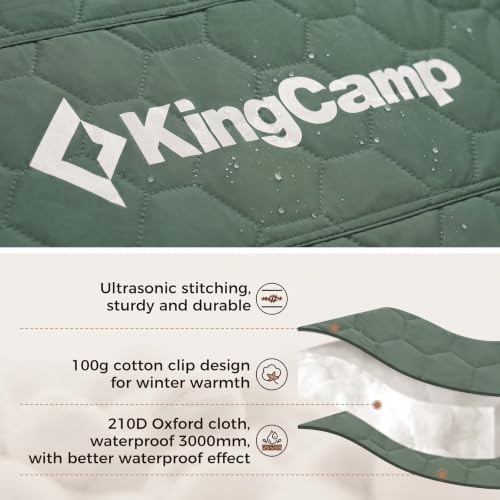
Insulated Winter Hot Tent with Stove Jack 5-6 Person Quilted Cabin Tent | 5-6P Tent: 3-Layer Quilted Insulation, Heat-Resist Stove Jack, Iron Frame, Removable Floor, TPU Windows, Double Snow Skirts




As an Amazon Associate we earn from qualifying purchases. Product prices and availability are accurate as of the date/time indicated.

Porayhut Pop up Insulated Bubble Tent 10'x10' – Cold Weather Camping Shelter, Weatherproof & Thermal Pod with Detachable Sunshade Cloth, Waterproof Floor, 2 Zipper Doors & 4 Mesh Windows


As an Amazon Associate we earn from qualifying purchases. Product prices and availability are accurate as of the date/time indicated.

BISINNA 4 Season Tent for Backpacking Lightweight Winter Tents 2 Person | Cold Weather Tents Waterproof Double Layer All Season Tent Aluminum Alloy Poles Easy Set Up for Camping, Hiking, Outdoor
As an Amazon Associate we earn from qualifying purchases. Product prices and availability are accurate as of the date/time indicated.
Prices shown are approximate and for reference only. Prices change often, so please check the current price on Amazon before you buy.
Best Insulation for Cold Weather Tents Reviews for 2026
1. Reflectix BP24010 24″ x 10′ Bubble Insulation Best Insulation for Cold Weather Tents
The Reflectix BP24010 24″ x 10′ Bubble Insulation uses polyethylene bubble material faced with aluminium foil, measures 24 inches wide by 10 feet long, and is about 5/16 inch thick. That narrow width suits a single wall of a small tent, a door panel, or a floor layer, because you can cut a short length, tape it in place, and test the result before committing to a full wrap. Its R-value of about R-1.1 is modest on its own, so its value comes from the reflective surface and from covering the tent completely rather than from a single thick layer.
2. Duck Brand Double Bubble Reflective Insulation Best Insulation for Cold Weather Tents
The Duck Brand Double Bubble Reflective Insulation uses the same polyethylene bubble and aluminium foil construction, but its roll is 24 inches wide by 25 feet long, which gives you enough length to cover two walls of a 2×4 tent or to wrap a smaller tent with fewer joints. Its thickness of about 5/16 inch keeps it flexible around corners and duct ports, and its R-value of about R-1.1 matches the other bubble products in this table, so the practical difference is coverage per roll rather than a higher thermal rating.
3. US Energy Products Double Bubble Reflective Foil Insulation Best Insulation for Cold Weather Tents
The US Energy Products Double Bubble Reflective Foil Insulation is supplied as a 48-inch-wide roll, 25 feet long, with a thickness of about 5/16 inch and an R-value of about R-1.1. The wider format is the useful detail for a grow tent, because a 48-inch panel can cover a full wall of a 4×4 tent in one piece, which means fewer taped seams and fewer places for cold air to leak through. The polyethylene bubble core stays light enough to hang from the tent frame with clips or tape, provided you do not let it sag onto a hot light.
4. AstroShield Reflective Insulation Roll Best Insulation for Cold Weather Tents
The AstroShield Reflective Insulation Roll is also 48 inches wide by 25 feet long, but it is thinner than the double-bubble rolls above, at about 3/16 inch, while keeping a similar R-value of about R-1.1. That thinner profile makes it easier to fold, roll, and store between seasons, and easier to fit behind a tent that is already close to a wall. It is a better choice when space is tight and you need a flat panel that follows the tent fabric closely, rather than a thicker roll that stands proud of the wall.
5. SmartSHIELD 3mm Reflective Insulation Roll Best Insulation for Cold Weather Tents
The SmartSHIELD 3mm Reflective Insulation Roll differs from the bubble products because its core is polyethylene foam rather than air bubbles, its thickness is 3 mm, and its roll is 48 inches wide by 50 feet long. The foam core gives it a smoother, more uniform surface that cuts cleanly and does not pop when you press it against a frame, and the 50-foot length is enough to insulate a larger tent and its floor from one roll. Its R-value of about R-1.1 is in line with the rest of this table, so choose it for handling and coverage, not for a dramatically higher thermal rating.
6. EcoFoil Double Bubble Insulation Roll Best Insulation for Cold Weather Tents
The EcoFoil Double Bubble Insulation Roll is the largest format in this comparison, at 48 inches wide by 125 feet long, with a thickness of about 5/16 inch and an R-value of about R-1.1. That length suits a grower with two tents, a tent plus a drying area, or a plan to insulate the walls, roof, and floor and still have material left for repairs and for next winter. The double-bubble construction is the same familiar polyethylene bubble and aluminium foil design, so the decision is mainly about buying in bulk and cutting panels without worrying about running short mid-project.
Buying Guide: How to Choose the Best Insulation for Cold Weather Tents in 2026
Start with your tent size, your room temperature, and your access to the tent, not with a single specification. Measure each wall, the roof, and the floor before you buy, then add at least 10 percent for overlaps, mistakes, and trimming around vents. A roll that looks generous on paper can run short once you allow for overlaps at the corners, so a careful measurement saves a second order and a cold night while you wait for it.
Reflective Foil, Bubble Core, and R-Value for Cold Weather Tents
R-value is useful, but it does not tell the whole story for a grow tent. Most reflective bubble and foam rolls in this category list about R-1.1, which is a modest value compared with rigid foam board. Their strength is the reflective foil, which returns radiant heat to the tent, and the air trapped in the bubbles or foam, which slows heat moving through the panel. Do not expect one thin layer to turn an unheated garage into a warm room. Expect it to reduce heat loss, shorten heater run time, and smooth out overnight temperature drops, then add a second layer or a safe heater if your room stays below freezing.
Size, Thickness, and Fitting Insulation Around a Grow Tent
Roll width decides how many seams you will have. A 24-inch roll needs two panels to cover a 48-inch wall, while a 48-inch roll covers it in one piece. Thickness decides how easily the material follows corners. A 5/16-inch bubble roll is flexible but bulky at a fold, while a 3 mm foam roll lies flatter. Cut panels slightly oversized, tape the joints with aluminium foil tape, and leave the zipper area workable. If you tape over the door completely, you will tear the insulation every time you open the tent, so make a separate door flap that can be lifted and closed again.
Floor, Roof, and Vent Insulation for Cold Weather Tents
Insulate the roof first if you can only do one surface, because warm air rises and a cold roof is a major heat-loss path. Insulate the floor next, because cold concrete cools pots and root zones directly. A layer under the tent, plus a pallet or a raised tray, breaks contact with a cold slab and keeps the growing medium warmer. Leave intake and exhaust ducts clear. Insulation wrapped over a vent can starve the tent of fresh air, raise humidity, and force fans to work harder, so cut neat openings and tape the edges around the duct rather than covering it.
Budget Guide for the Best Insulation for Cold Weather Tents
The budget pick in this comparison is the Reflectix BP24010 24″ x 10′ Bubble Insulation, at $15-$20, because it is the cheapest model in the table and still offers polyethylene bubble material with aluminium foil, a 24-inch by 10-foot roll, and a thickness of about 5/16 inch that is enough to test insulation on a small tent or a single cold wall. For most growers, a wider roll will help more than a narrow roll, because it covers a wall in fewer pieces and leaves fewer seams to tape, but it costs more and is harder to justify if you only need to cover one side. Spend the saving on foil tape, a thermometer at canopy height, and a thermostat for your heater, because measurement and control matter more than buying the largest roll first.
Safety, Condensation, and Heater Use With Tent Insulation
Keep insulation away from heaters, hot lamp housings, and any exposed heating element, and follow the clearance distances in the heater and light manuals. Reflective foil can reflect light as well as heat, so check that it does not create a hot spot on a plant or a sensor. Watch for condensation on the cold side of the insulation, especially on the roof, and wipe or air it out before mould can start. Never use a fuel-burning heater inside a sealed tent, and never block a vent to save heat, because fresh air and safe combustion matter more than a few degrees.
Frequently Asked Questions About the Best Insulation for Cold Weather Tents
What is the best insulation for cold weather tents in 2026?
For the best insulation for cold weather tents in 2026, the Reflectix BP24010 24″ x 10′ Bubble Insulation is often the best budget choice because it offers polyethylene bubble material with aluminium foil, a 24-inch by 10-foot roll, and a thickness of about 5/16 inch that is enough to cover a small tent wall or test insulation before a larger purchase. A useful extra fact is that a second layer, offset so its seams do not line up with the first layer, reduces air leaks more than simply buying a thicker single roll, and it lets you remove one layer in mild weather without stripping the whole tent. Choose based on your tent size, your room temperature, and whether you need a narrow test roll or a wide roll for full coverage.
Should insulation go inside or outside a grow tent in cold weather?
Should insulation go inside or outside a grow tent in cold weather depends on moisture and access. Outside is usually better, because it keeps the tent fabric dry, leaves the growing space unchanged, and makes it easy to inspect for condensation. A useful extra fact is that insulation placed inside can trap moisture between the insulation and the tent wall, especially near the roof, so if you must insulate inside, leave a small air gap, check behind the panels weekly, and keep the material clear of lights and fans. For most growers, outside installation is simpler and safer.
How much insulation do I need for a 4×4 grow tent?
How much insulation you need for a 4×4 grow tent depends on whether you cover the walls, roof, and floor. A 4×4 tent has four walls of about 16 square feet each if it is about 4 feet wide and 4 feet tall in the insulated section, plus a roof and a floor of about 16 square feet each, so full coverage is roughly 96 square feet before overlaps. A useful extra fact is that a 48-inch-wide roll covers a 4-foot wall in one vertical panel, while a 24-inch-wide roll needs two panels per wall, so wider rolls save taping time even when the total area is the same. Measure your actual tent height, add overlap, and buy one roll larger than the bare calculation.
Will insulation alone keep a grow tent warm in winter?
Will insulation alone keep a grow tent warm in winter depends on how cold the room gets. Insulation slows heat loss, but it does not create heat, so a tent in a room that falls below freezing will still need a safe heater, a thermostat, and a temperature sensor at canopy height. A useful extra fact is that insulating the floor and the roof first gives a larger benefit than insulating only one side wall, because the floor loses heat to cold concrete and the roof loses heat to cold air above the tent. For winter growing, pair insulation with a controlled heater and daily temperature checks.
Related guides
- Best Fish to Grow Aquarium for Food in 2026: Tilapia, Bluegill, Trout, and Barramundi Compared for a Species Read Against Its Law First, a Tank Sized to the Adult and Not the Fingerling, and Water Kept in a Diary Rather Than a Hope
- Best Reservoir Heater for Cold Setups in 2026: How to Pick a Best Reservoir Heater for Cold Setups That Is Safe, Accurate, and Perfect for Your Hydroponics
- How to Choose Hydroponics System for Lettuce: 6 How to Choose Hydroponics System for Lettuce Picks in 2026
- Best Portable Ventilation Fan for Small Tents in 2026: Best Portable Ventilation Fan for Small Tents for Fresh Air, Good Cooling, and Simple Indoor Growing
More from Amazon
Programs that pair well with the guide above. Offers and eligibility are set by Amazon and may change.
Free shipping on eligible items, Prime Video and more. Eligible new members can start with a free trial.
Start a Prime free trialAudiobooks and podcasts to listen to on the go. Eligible new members can start with a free trial.
Try Audible freeAd-free music streaming. Eligible new subscribers can start with a free trial.
Try Music Unlimited freeA free business account with business pricing and bulk-buying tools for work, shop or home office.
Create a business accountAs an Amazon Associate we earn from qualifying purchases.

Write Your Review
No reviews yet. Be the first to share your experience!