
What's inside
- Best Hydroponics for Growing Basil for Pesto by Scale
- Quick Comparison: Best Hydroponics for Growing Basil for Pesto Systems
- Detailed Reviews: Best Hydroponics for Growing Basil for Pesto Picks
- Buying Guide: Choosing the Best Hydroponics for Growing Basil for Pesto
- Countertop Systems for Fresh Basil
- Frequently Asked Questions About Best Hydroponics for Growing Basil for Pesto
As an Amazon Associate I earn from qualifying purchases. This post may contain affiliate links at no extra cost to you.
The best hydroponics for growing basil for pesto starts with a culinary fact that should size the whole system: pesto eats basil by the packed cup, not by the garnish. A sauce for a family can consume the leaves of several healthy Genovese plants in one afternoon, and a grower who wants pesto as a regular pleasure rather than an annual ceremony needs a system that produces basil in overlapping abundance — plants at different ages, harvested by the cut-and-come-again method, replaced on a rhythm before they turn woody and bitter. A six-pod countertop garden can absolutely grow beautiful basil, and it can make pesto, in modest batches, if its plants are harvested with restraint. A grower whose eyes light up at the words freezer trays of pesto for winter needs more sites, more light, and a plan for succession, and should buy that system from the start rather than discovering appetite after the hardware.
Variety is the first growing decision. Genovese basil, in its classic and improved forms, is the pesto standard for its large, tender leaves and its characteristic flavor, and hydroponic seed lines include Genovese types selected for indoor and disease-conscious growing, including varieties bred for resistance to downy mildew, a disease that has made outdoor basil unreliable in many humid regions. Growers who make pesto often also keep a second variety for interest — a large-leaf Italian type for yield, a lemon or Thai basil for other cooking — but the pesto engine is Genovese, in quantity. Buy seed from a reputable supplier, store it cool and dry, and sow more than you need on a schedule, because basil germinates readily and a steady pipeline of young plants is worth more than any single heroic harvest from aging plants.
System choice follows from scale and temperament. Countertop smart gardens — AeroGarden classes and their competitors — integrate light, timing, and a small reservoir in one appliance and teach a beginner the whole cycle with the least assembly; their limit is sites and canopy room, which basil, a vigorous plant that wants to become a small bush, will test. Larger recirculating and deep water culture systems, tower systems, and simple Kratky jars and tubs scale the site count and let a grower run a true succession: seedlings in a tray, production plants under the main light, and a harvest rotation. DWC buckets and tubs suit basil particularly well because basil loves the oxygenated root zone, grows fast, and tolerates the frequent harvesting that pesto demands. NFT channels can grow excellent basil in a more built system, but a home pesto grower usually gets more joy per dollar from DWC and a good light. Whatever the system, keep water and electrics separated and protected as indoor growing requires, use food-safe materials for a crop you will eat, and follow local rules for indoor cultivation and for any plant you grow.
Growing conditions decide whether hydroponic basil tastes like pesto or like green water, and they are manageable. Light is the flavor input: basil under generous light, on a long day as the grower or the smart garden’s program sets it, grows compact, leafy, and aromatic, while basil under weak light stretches, pales, and produces large thin leaves with disappointing flavor. Nutrients should be a reputable hydroponic formula used as its maker directs for leafy herbs, starting at modest strength for young plants, with pH and strength monitored with a meter you trust and adjusted by the nutrient maker’s guidance; basil is not a heavy feeder, and overfeeding is a beginner mistake that costs flavor and invites problems. Warmth suits basil, which sulks in cold rooms and cold water, and air movement from a small fan strengthens stems and discourages the still, humid pockets where disease starts. Harvest is the final input and it is a technique: pinch and cut above a set of leaves so the plant branches into two growing tips, harvest regularly even when you do not need a full batch, and never let production plants flower if leaves are the goal, because flowering shifts the plant’s energy and flavor. A plant allowed to bolt is a plant retiring from pesto duty; let one go to seed if you wish, and keep the production line young.
This guide compares six real, currently sold routes to pesto-scale basil: AeroGarden Harvest and Bounty classes, iDOO and similar countertop smart garden classes, Lettuce Grow Farmstand classes as the tower option, a DWC bucket and tub system built from Hydrofarm and General Hydroponics-class components, Kratky jars and tubs as the no-pump method, and Spider Farmer and AC Infinity-class indoor grow light and tent or shelf setups for growers scaling production under a serious light. Confirm reservoir size, site count, and light specifications for the exact model before buying.
Best Hydroponics for Growing Basil for Pesto by Scale
Countertop scale: pesto as a regular small pleasure
A countertop garden with six to nine sites, devoted mostly to basil rather than divided among six different herbs, can keep a household in small-batch pesto, Caprese, and garnish with a rhythm of regular pinching. The discipline is allocation: the tomato or the novelty herb in the brochure photograph is spending a site that pesto wanted. Growers at this scale should harvest by the handful often, freeze small amounts of finished pesto as they go, and let a jar accumulate in the freezer rather than waiting for one giant harvest the system cannot stage. A second countertop unit, bought after the first proves the habit, is a legitimate scale-up that keeps the system simple and redundant.
Production scale: succession is the whole secret
At production scale, the system is a calendar wearing hardware. Sow a small batch of Genovese seed every two to three weeks in your germination method, move seedlings into the main system as harvested plants are retired, and keep production plants in their prime leaf-making weeks rather than nursing old plants into woodiness. DWC tubs with several sites under one good light, or a tower with many sites, serve this rhythm well because sites can be staggered by age. Keep records for the first two cycles — sowing dates, nutrient strength and pH as measured, harvest weights or packed cups if you care to measure — because pesto production improves by adjustment, and memory is a poor gardener.
Flavor, food safety, and the harvest routine
Wash hands before harvesting, use clean scissors or snips, harvest into a clean bowl, and process or refrigerate leaves promptly rather than leaving a warm pile on the counter. Rinse leaves gently if your growing conditions call for it and dry them well before making pesto, because wet leaves dilute flavor and affect how a sauce keeps. If you freeze pesto, portion it in trays or small containers, label with the date, and follow reputable food safety guidance for storage times and for garlic-in-oil mixtures, which deserve particular care and refrigeration discipline. A hydroponic system should be cleaned between cycles as its maker directs, with reservoirs, lines, and sites kept free of algae and biofilm by light exclusion, regular nutrient changes, and honest scrubbing, because a clean system grows clean food.
Quick Comparison: Best Hydroponics for Growing Basil for Pesto Systems
| Model | Key Specs | Best For | Typical Price Range | Rating |
|---|---|---|---|---|
| AeroGarden Bounty Classes | Countertop smart garden classes as maker states by model, site classes, light height classes, reservoir classes | Best hydroponics for growing basil for pesto countertop overall | $250 – $400 by model | 4.6 / 5 |
| DWC Bucket and Tub Systems | Deep water culture classes from hydroponic component makers as stated, bucket and tub sizes, air pump classes, site classes by build | Best production value | $80 – $250 by build size, light extra | 4.6 / 5 |
| AeroGarden Harvest Classes | Smaller countertop classes as maker states, site classes, light classes, beginner classes | Best beginner small batch | $120 – $220 by model | 4.4 / 5 |
| Lettuce Grow Farmstand Classes | Tower system classes as maker states, site classes by size, indoor light classes in relevant setups, reservoir classes | Best many-site tower | $500 – $900 by size and light setup | 4.4 / 5 |
| iDOO Smart Garden Classes | Countertop classes as maker states, site classes, light classes, value classes | Best budget countertop | $70 – $150 by model | 4.1 / 5 |
| Kratky Jar and Tub Setups | Passive hydroponic method, jar and tub classes, net pot classes, no pump classes, light separate | Best simplest scale-up | $30 – $100 by setup, light extra | 4.2 / 5 |
Site counts, reservoir volumes, light wattage and height, and included nutrients or seed pods are each maker’s specification for the current exact model or component set. Prices are typical street ranges, with lights, nutrients, and meters extra where noted. Ratings reflect pesto suitability: basil site capacity, light adequacy, succession practicality, ease, and value.
Detailed Reviews: Best Hydroponics for Growing Basil for Pesto Picks
1. AeroGarden Bounty Classes – Best Countertop Overall
The Bounty classes give countertop basil the two things it runs out of in smaller units: light height for a plant that wants to grow upward between harvests, and enough sites that devoting most of them to Genovese still leaves a corner for a second herb. For a household that wants pesto regularly without building a system, this is the appliance answer at its most capable.
Manage it like a crop, not a decoration: prune on schedule, keep the light as close as the maker’s guidance and the plant’s growth dictate, and retire and replace plants on a rhythm. A Bounty left to become a basil tree with woody stems is a system being used at half its pesto potential.
2. DWC Systems – Best Production Value
A DWC tub or a set of buckets under a good light is the pesto producer’s workshop: the most basil per dollar in this table, sites you arrange yourself, and a root environment basil thrives in. It asks for assembly, a meter, and a grower’s attention to pH, strength, water level, and temperature, and it returns harvests that countertop units cannot stage.
Buy the light as seriously as the tub, because in a DWC build the light is the engine and the tub is the chassis. A production light from a reputable indoor growing maker, hung and timed as directed, over a modest tub, will out-produce a large system under a weak light every cycle of the year.
3. AeroGarden Harvest Classes – Best Beginner Small Batch
The Harvest classes are where many pesto growers correctly start: a compact unit, a forgiving learning curve, and harvests sized for a couple, a small family, or a freezer tray accumulated patiently. As a first hydroponic system it teaches germination, pruning, nutrient routine, and the cut-above-the-node harvest in a few weeks.
Its ceiling is its size, and the grower who discovers a serious pesto habit should read that as the system succeeding at its teaching job. Graduate to a Bounty, a second unit, or a DWC build with the confidence the Harvest gave you, and keep the Harvest for seedlings or a specialty herb.
4. Lettuce Grow Farmstand Classes – Best Tower
A tower multiplies sites vertically, which suits a grower with floor space for one footprint and appetite for many plants at staggered ages. Basil on a tower, with indoor lighting as the setup requires, can hold a genuine succession in a single piece of furniture, and the harvest routine — walking around the tower with a bowl — is a pleasure in itself.
Towers ask for even light and water distribution to be verified rather than assumed, because a plant at a shaded or dry position will lag its siblings. Rotate and arrange with the maker’s guidance, and give basil the best-lit positions, because pesto is the crop the tower was bought for.
5. iDOO Classes – Best Budget Countertop
iDOO and similar budget countertop gardens lower the entry price to hydroponic basil and can grow a satisfying small crop, which makes them a rational first experiment for a cautious buyer. Their lights, reservoirs, and site spacing sit a class below the AeroGarden rows, so expectations and harvest size should sit accordingly.
At this price, devote the unit to basil almost entirely, harvest little and often, and judge the experiment by whether the household wants more. Wanting more is the success condition, and it points up this table with evidence in hand.
6. Kratky Setups – Best Simplest Scale-Up
The Kratky method — plants in net pots suspended in a static, aerated-by-gap nutrient solution, with no pump — scales basil in jars and tubs for very little money and no electricity at the root zone, under a light you provide. For a grower with a bright shelf setup, a row of tubs at staggered ages is a quiet, inexpensive pesto line.
Kratky asks for water level discipline, because the method depends on maintaining the air gap as roots grow, and for honest attention to solution temperature and cleanliness in warm rooms. It rewards a methodical grower and punishes a forgetful one gently but surely, which is to say it is gardening in its purest form.
Buying Guide: Choosing the Best Hydroponics for Growing Basil for Pesto
Size the system by your pesto appetite
Decide whether pesto is a monthly small batch, a weekly sauce, or a freezer-filling season’s project, and buy sites and light for that answer. Count on devoting most sites to Genovese basil, sow in succession every few weeks, and plan the freezer space for the harvest rhythm you intend. A system one size larger than your first instinct, run with discipline, usually satisfies longer than a system bought at the exact edge of appetite and outgrown by spring.
Buy light, meters, and nutrients as one budget
For any system beyond a countertop appliance, allocate real money to the light, a pH and EC or TDS meter you will calibrate and trust, and a reputable hydroponic nutrient line used as directed. Those three decide flavor and reliability more than the reservoir’s shape. Keep water and electrics separated and protected, use timers and equipment as their makers direct, and keep the growing area clean enough to eat from, because you will.
Learn the harvest before the first plant is ready
Practise the cut: harvest stems above a pair of leaves, leave enough plant to regrow, pinch any flower buds the moment they form on production plants, and harvest in the morning or when leaves are turgid and aromatic by your own observation. Process leaves promptly, freeze pesto in labeled portions, and retire plants when stems wood and leaf quality falls, replacing them from your seedling pipeline without sentiment. Pesto is a system for turning young basil into stored summer, and the grower who runs the calendar, not just the reservoir, is the one whose freezer proves it.
Countertop Systems for Fresh Basil
Basil is fast and forgiving, which makes it a favorite for small indoor hydroponic units. These systems are sized for the kitchen.
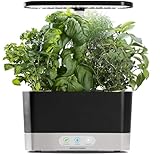
AeroGarden Harvest Indoor Garden
A well-known countertop unit with a full-spectrum light and a simple control panel. Holds several pods, so a basil harvest can run alongside other herbs.
As an Amazon Associate we earn from qualifying purchases at no extra cost to you.
LETPOT 12-Pod Hydroponics Kit
A larger tank with an adjustable light arm. The extra headroom helps tall basil keep growing before you trim it.

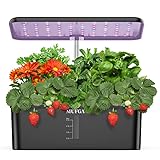
MUFGA 12-Pod Indoor Garden
A budget-friendly kit that includes a grow light and water tank. Good for trying hydroponics before committing to a bigger rig.
Ahopegarden 10-Pod Hydroponics System
A compact system with a pod layout that leaves space between plants. Useful for rotating batches of basil.

Frequently Asked Questions About Best Hydroponics for Growing Basil for Pesto
What is the best hydroponics for growing basil for pesto?
For a countertop, AeroGarden’s Bounty classes lead this table for their light height and site count devoted mostly to Genovese basil. For production and value, a deep water culture tub or bucket system under a serious indoor grow light is the strongest answer, with AeroGarden Harvest classes as the beginner start, Lettuce Grow towers for many staggered sites, iDOO classes as the budget countertop, and Kratky tubs as the simplest scale-up. Every route depends on the same disciplines: Genovese variety, generous light, modest nutrient strength monitored by meter, regular pinching above a node, and succession sowing so plants are always in their prime.
How many basil plants do I need for regular pesto?
More than a garnish grower expects, because a single batch of pesto can take the leaves of several mature plants when harvested sustainably rather than stripped. As a working approach, keep at least four to six Genovese plants in prime production for a household that makes small batches regularly, and a larger staggered line — a dozen or more sites across ages — for a grower freezing pesto in quantity. Harvest by cutting above leaf nodes so plants branch and regrow, replace plants as they wood and decline, and accumulate frozen pesto in portions across harvests instead of demanding one enormous picking from plants that then need weeks to recover.
Why does my hydroponic basil taste weak or grow leggy?
The usual causes are insufficient light, overfeeding or an unbalanced nutrient routine, cold conditions, and plants that are too old or beginning to flower. Basil flavor follows light and youth: give it the strongest sensible light for the system, keep the light at the maker’s recommended distance as plants grow, feed at modest strength verified by a meter and the nutrient maker’s guidance, keep the room and solution from running cold, and harvest and replace on a rhythm that keeps production plants young and unflowered. If a plant has bolted or wooded, its best pesto days are behind it; compost it with thanks and let a seedling take its site.
Can I grow basil for pesto all year indoors?
Yes, and that is the central promise of hydroponics for this crop: with light, warmth, nutrients, and succession sowing under your control, Genovese basil can be harvested in every month, including the months when outdoor basil in many regions is impossible or diseased. Year-round production asks for year-round routine — reservoir changes and cleaning as directed, meter calibration, seed stock kept fresh, and attention to indoor humidity and air movement — and for food safety discipline in harvesting and processing. Growers who keep the calendar find that winter pesto, made from a plant cut an hour earlier, justifies every part of the system.
Related guides
- Best LED vs Fluorescent Grow Light Growing in 2026: 6 Top LED and Fluorescent Grow Lights, Bright Growth, and Easy Growing
- 200W LED vs 400W LED Grow Light in 2026: Which Size Is Best for Your Grow Tent?
- Best Meter for Hydroponic Water Testing in 2026 for Healthy Plants, Accurate pH, and Choosing the Best Meter for Hydroponic Water Testing
- Best LED Light for Growing Basil in Windowless Kitchens in 2026: 7 LED Grow Lights That Grow Basil Without a Window, Without a Big Tent, and Without a High Electric Bill
More from Amazon
Programs that pair well with the guide above. Offers and eligibility are set by Amazon and may change.
Free shipping on eligible items, Prime Video and more. Eligible new members can start with a free trial.
Start a Prime free trialAudiobooks and podcasts to listen to on the go. Eligible new members can start with a free trial.
Try Audible freeAd-free music streaming. Eligible new subscribers can start with a free trial.
Try Music Unlimited freeA free business account with business pricing and bulk-buying tools for work, shop or home office.
Create a business accountAs an Amazon Associate we earn from qualifying purchases.

Write Your Review
No reviews yet. Be the first to share your experience!